Choosing a Door Pull Knob for 2026 is no longer a purely decorative decision. Global buyers now compare grip comfort, corrosion resistance, accessibility, installation speed, and lifecycle value. A polished knob may look attractive in a showroom, yet feel slippery in a wet hotel corridor. Small details become daily experiences.
Fortune Business Insights estimates that the global door handles market will continue expanding through 2032, supported by residential construction, hospitality renovation, and commercial modernization. Grand View Research also identifies material innovation, ergonomic design, and premium finishes as important market drivers. ASSA ABLOY’s 2024 Annual Report highlights security, sustainability, and user experience across the wider door hardware sector. These reports do not answer every purchasing question. They provide useful direction, not perfect certainty.
Lori Greene, an AHC and architectural hardware specialist, often reminds specifiers, “Door hardware is not just a decorative choice; it is a life-safety choice.” Her point applies to every Door Pull Knob selection. Buyers should examine hand clearance, mounting strength, stainless-steel grade, coating durability, and cleaning requirements. A pull that survives a laboratory test may still disappoint beside a busy coastal entrance. That is where product samples matter. So does honest supplier communication. This guide compares the best Door Pull Knob types for global buyers in 2026, including tubular, solid, concealed-fix, back-to-back, and accessible designs. Some recommendations will remain conditional. Climate, door thickness, traffic volume, and local accessibility standards can change the result. The “best” knob is rarely universal. It is the one that performs reliably in its actual setting.
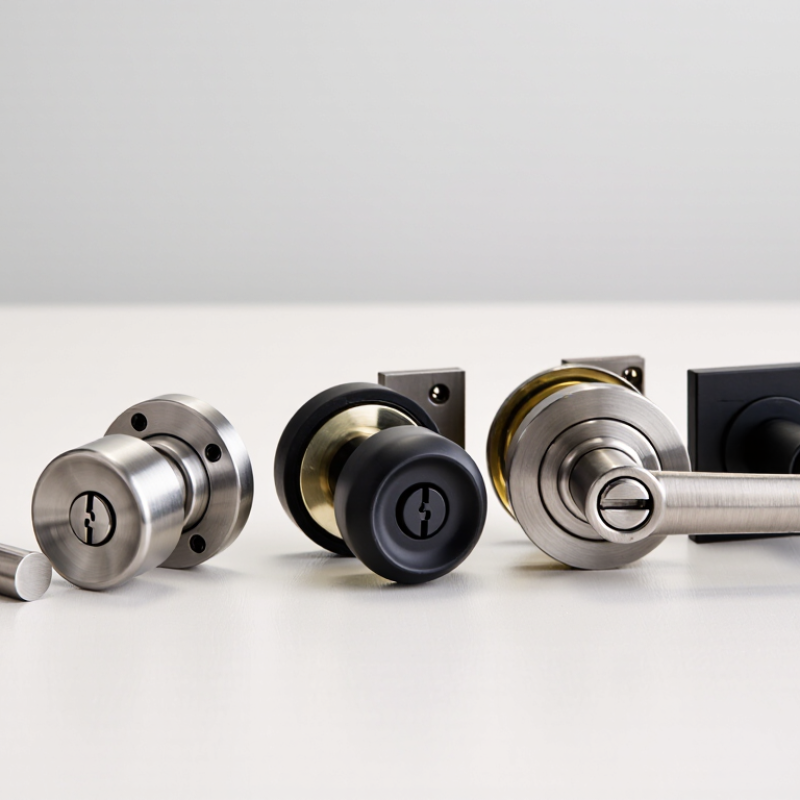
For global buyers, “door pull knob” describes a grip, not one universal product. A round knob offers a compact, familiar hold. A mushroom knob gives more palm contact. T-shaped knobs support a direct finger pull. Ring knobs add movement and visual character. Recessed knobs sit nearly flush, useful where corridors are narrow. The correct form depends on door weight, clearance, user strength, and cleaning demands. Small details matter.
Key terminology prevents costly misunderstandings. “Projection” means how far the knob extends from the door face. “Backplate” is the mounting plate beneath it. “Rose” usually means a smaller round plate. “Through-bolt fixing” uses bolts across the door for stronger retention. “Center-to-center” describes the distance between fixing points. “Pull side” identifies the face used to open the door. Ask for drawings, hole sizes, screw lengths, and tolerances before ordering. Photos alone can mislead.
Function should guide the specification. A fixed pull knob suits a door that opens with a separate latch or lock. A turnable knob may operate a spindle and latch, depending on the mechanism. A dummy knob is decorative and does not actuate hardware. For busy public doors, rounded edges, corrosion-resistant finishes, and easy-clean surfaces deserve attention. Local safety and accessibility requirements also need checking. Yet “universal” fit is often overstated. I have seen elegant knobs fail because projection collided with adjacent walls or fixing threads did not match. Test a sample on the actual door, then review installer feedback.
The chart compares representative projection depths commonly specified for major door pull knob and pull-handle forms. Projection is the distance from the door face to the outermost usable surface, measured in millimeters. Round and mushroom knobs are compact options, while T-bar, ring, and offset pulls generally provide more finger clearance. Final dimensions should be checked against the door thickness, mounting method, accessibility requirements, and project hardware schedule.
Door pull knobs can be classified by shape, profile, material, and visual weight. Round knobs suit classic doors and offer a predictable grip. Square or faceted knobs create sharper lines, but their corners may feel less comfortable. Ring pulls and recessed knobs support sliding doors or compact spaces. A 30 mm projection looks neat on a cabinet-style door, while a deeper pull gives more finger clearance. Design is not only decoration. It changes daily handling.
Installation classification depends on fixing method and door construction. Single-sided knobs use concealed screws and create a clean exterior. Through-bolted knobs pass through the door, improving stability on heavy timber or metal doors. Surface-mounted pulls need a flat, solid area and accurate pilot holes. Hollow-core doors may require a reinforcement plate; ordinary screws can loosen over time. Check door thickness, backset, clearance, and screw length before ordering. Field inspections often reveal attractive hardware failing because the mounting surface was overlooked. That mistake deserves a second check.
Tips: Match the knob’s projection with nearby trim, seals, and adjacent doors. Test a sample at hand height before approving a large order. Confirm corrosion resistance for humid rooms or coastal projects. Ask for installation drawings and load guidance from the supplier. Measurements can vary slightly. Record them clearly.
| No. | Door Pull Knob Type | Design Classification | Typical Shape and Visual Features | Common Materials and Finishes | Typical Installation Method | Suitable Door Locations | Main Advantages | Key Limitations | Recommended Buyer Checks |
|---|---|---|---|---|---|---|---|---|---|
| 1 | Round Single Knob Pull | Classic / Minimal | Spherical or gently rounded knob with a compact silhouette and no integrated lever. | Stainless steel, brass, aluminum, glass, ceramic, or wood; polished, satin, brushed, or powder-coated finishes. | Usually surface-mounted with one central bolt passing through the door. Through-bolts are preferred for heavier doors. | Interior doors, cabinets, wardrobes, lightweight room doors. | Simple appearance, easy to operate, compact footprint, and broad compatibility with many door styles. | Limited leverage compared with a long pull handle; small knobs may be difficult to grip with wet or gloved hands. | Check knob diameter, projection, bolt length, door thickness range, and supplied fixing hardware. |
| 2 | Oval or Egg-Shaped Knob Pull | Ergonomic / Decorative | Elongated rounded profile designed to fit the palm more naturally than a spherical knob. | Solid brass, stainless steel, aluminum, wood, or stone-look composite with satin, antique, or polished finishes. | Commonly installed with a single concealed or through-bolt fixing; some designs use a mounting plate. | Residential interior doors, hospitality rooms, furniture doors, and decorative entrances. | Improved hand contact, comfortable pulling action, and distinctive decorative character. | Profile direction and mounting orientation may affect appearance; decorative surfaces can require careful cleaning. | Confirm orientation, grip dimensions, projection, surface durability, and compatibility with the door edge clearance. |
| 3 | Bar Pull Knob | Linear / Contemporary | Short horizontal or vertical bar with rounded, square, or tapered ends. | Stainless steel, brass, aluminum, or zinc alloy; brushed, satin, polished, black, bronze, or plated finishes. | Typically fixed with two mounting points and concealed screws or through-bolts. A backplate may be included. | Modern interior doors, kitchen and furniture doors, offices, and commercial spaces. | Provides better leverage than a small round knob and offers a clear, modern visual language. | Requires accurate drilling at two points; exposed edges or sharp corners may be unsuitable for some high-traffic areas. | Check center-to-center spacing, bar diameter, projection, corner radius, and the required drilling template. |
| 4 | Backplate Pull Knob | Traditional / Protective | A knob or short pull mounted on a decorative or protective plate that covers the fixing area. | Brass, stainless steel, iron, aluminum, or zinc alloy; polished, satin, antique, or painted finishes. | Surface-mounted through a backplate using screws or bolts. The plate may conceal minor surface marks. | Traditional doors, restored buildings, entrance doors, and doors requiring a defined mounting zone. | Enhances visual detail, protects the door surface, and can help conceal previous fixing holes. | Backplates increase overall footprint and may not suit very narrow stiles or minimalist designs. | Measure plate height and width, screw spacing, door stile width, and clearance from nearby hardware. |
| 5 | Recessed Pull Knob | Flush / Space-Saving | Knob or grip sits partly inside a routed or cut-out pocket, leaving little external projection. | Stainless steel, aluminum, brass, or engineering plastic with brushed, anodized, or powder-coated finishes. | Requires a prepared recess or pocket; secured with screws, clips, or a fixing frame depending on the design. | Sliding doors, pocket doors, compact rooms, cabinets, and applications with restricted clearance. | Reduces snagging and saves space where a projecting pull cannot be used. | Installation is more complex and usually requires accurate routing or cutting; replacement may involve matching the existing cut-out. | Verify cut-out dimensions, pocket depth, door thickness, edge distance, and installation tooling. |
| 6 | Flush Pull with Finger Grip | Flush / Functional | Recessed rectangular, oval, or round plate with an internal finger recess rather than an external knob. | Stainless steel, aluminum, brass, or zinc alloy; satin, brushed, polished, black, or bronze finishes. | Installed into a routed recess and secured with screws, adhesive, clips, or a concealed mounting frame. | Pocket doors, sliding doors, barn-style sliding doors, and furniture panels. | Low projection, clean appearance, and minimal interference with adjacent panels or walls. | Provides less gripping area than a projecting pull and needs precise recess preparation. | Check internal grip depth, plate dimensions, recess tolerance, fixing system, and suitability for the door weight. |
| 7 | Edge Pull Knob | Compact / Concealed | Small pull integrated near the door edge or mounted on the edge-facing side of a sliding panel. | Stainless steel, aluminum, brass, or durable polymer; brushed, anodized, plated, or painted finishes. | Usually surface-mounted or recessed at the panel edge with screws, adhesive, or a dedicated mounting channel. | Sliding doors, pocket doors, cabinet doors, and narrow-clearance installations. | Uses minimal space and allows a panel to be operated without adding a large visible fitting. | May be uncomfortable for frequent heavy use and can be unsuitable where the edge construction is weak. | Confirm edge thickness, hand access, panel travel, fixing depth, and resistance to repeated pulling. |
| 8 | Paired Back-to-Back Pull Knobs | Double-Sided / Symmetrical | Matching knobs installed on both faces of a door, commonly aligned on a shared axis. | Stainless steel, brass, aluminum, glass, or wood with coordinated surface finishes. | Normally connected with a through-bolt, threaded rod, or concealed fixing set passing through the door. | Glass doors, double-action doors, interior doors, and entrances requiring operation from both sides. | Balanced appearance and convenient access from either side of the door. | Requires accurate through-holes and may need washers, gaskets, or special fasteners for glass or thin panels. | Check door thickness, hole diameter, bolt length, load rating, safety requirements, and glass compatibility. |
| 9 | Offset or Angled Pull Knob | Ergonomic / Architectural | Grip is offset from the mounting point or set at an angle to improve hand clearance and pulling leverage. | Stainless steel, brass, aluminum, or zinc alloy; brushed, satin, polished, bronze, or matte finishes. | Installed with one or two structural fixings, often using a concealed base or reinforced through-bolt. | Large doors, heavy interior doors, accessibility-focused spaces, and architectural entrances. | Offers improved knuckle clearance and a stronger pulling position than a flat knob. | Projects farther from the door and may require additional clearance from walls, adjacent doors, or glazing. | Check projection, grip angle, clearance zone, fixing strength, and whether reinforcement is required. |
| 10 | Decorative Ring Pull | Heritage / Decorative | A movable or fixed ring suspended from a rosette, plate, or decorative mount. | Cast brass, iron, stainless steel, aluminum, or zinc alloy; antique, aged, polished, or painted finishes. | Surface-mounted with screws or bolts, usually through a decorative plate or rosette. | Traditional entrances, heritage-style interiors, gates, cupboards, and furniture doors. | Strong decorative impact, flexible hand position, and suitability for period-inspired designs. | Moving parts can create noise; intricate surfaces may collect dust and may not suit minimalist projects. | Check ring movement, plate diameter, load capacity, corrosion resistance, and fixing strength for the door type. |
| 11 | Glass Door Pull Knob | Glass-Specific / Protective | Compact knob designed with protective washers, gaskets, or a clamp system to distribute pressure on glass. | Stainless steel, brass, aluminum, glass, or corrosion-resistant alloy; satin, polished, or coated finishes. | Fixed through a pre-drilled glass hole using compatible gaskets, sleeves, washers, and threaded fasteners; drilling tempered glass after manufacture is not permitted. | Tempered or laminated glass doors, shower enclosures, office partitions, and display doors. | Provides a clean appearance while reducing direct metal-to-glass contact when correctly installed. | Requires exact hole dimensions and compatible hardware; incorrect tightening can damage glass. | Confirm glass type, thickness, hole diameter, gasket material, tightening method, and applicable safety standards. |
| 12 | Heavy-Duty Commercial Pull Knob | High-Traffic / Structural | Oversized knob or robust short pull designed for repeated use and higher pulling forces. | Commercial-grade stainless steel, brass, aluminum, or steel with durable brushed, polished, or powder-coated finishes. | Installed with reinforced through-bolts, structural screws, or a backing plate fixed to the door construction. | Schools, healthcare facilities, offices, retail spaces, public buildings, and high-use corridors. | Durable, easy to identify, and generally more resistant to loosening under frequent operation. | Higher cost, greater weight, and larger projection than residential decorative knobs. | Check cycle testing, load rating, substrate reinforcement, corrosion class, accessible grip size, and maintenance requirements. |
In 2026, door pull knobs must match the environment, not only the interior style. Stainless steel is a dependable choice for kitchens, hospitals, and busy offices. Grade 316 performs better near salt air than standard 304 steel. It resists corrosion, but regular cleaning still matters. Moisture changes everything.
Brass offers a warmer, traditional appearance for homes, hotels, and heritage interiors. Its surface can age naturally, while lacquered brass keeps a brighter appearance longer. Aluminum is lightweight and practical for large doors. Powder-coated aluminum supports many colors, but damaged coating may expose the metal underneath. Zinc alloy suits decorative indoor hardware, although it deserves more caution in damp areas. I would avoid using it outdoors without verified corrosion testing.
Finish selection affects both touch and maintenance. Satin finishes hide fingerprints better than polished surfaces. Matte black looks modern, yet dust and water marks can become visible on bathroom doors. PVD finishes generally provide stronger wear resistance than simple plating, but quality varies between manufacturers. In coastal projects, I specify corrosion-tested hardware and sealed fixings whenever possible. For high-traffic entrances, rounded edges reduce snagging and make cleaning easier. A common mistake is choosing a beautiful finish before checking hand oils, cleaning chemicals, and local humidity. No finish is maintenance-free. Door weight, pull size, mounting strength, and user comfort also need practical testing before purchase.
For global buyers, choosing a door pull knob starts with measurements, not appearance. Measure door thickness, clearance, mounting-hole spacing, and the distance from the knob to the frame. A 30–40 mm projection often feels balanced on standard interior doors, but thick doors may require longer fixing hardware. Check the product’s stated tolerance. Small differences can prevent a clean installation. In field checks, a paper template placed over the door reveals alignment problems before drilling. I once trusted a listed measurement and still found the plate crowded by the trim.
Ergonomics depends on hand size, door weight, and frequency of use. Rounded knobs suit users who prefer a compact grip, while larger pull shapes reduce finger pressure. Leave enough space for knuckles, gloves, and nearby walls. Test the motion with both wet and dry hands; polished surfaces can become slippery. Compatibility also includes latch type, spindle size, screw length, and door swing. Confirm whether the pull is fixed or paired with a functioning latch. Safety and accessibility requirements vary by location, so verify local guidance with a qualified installer.
Tips: Request a dimensioned drawing and installation kit list. Compare actual measurements with the door, not only the product photo. Use temporary tape to mark the grip position. Ask for replacement screws if the supplied length does not suit your door. Keep a small allowance, but avoid guesswork. Not every universal fit is truly universal.
Global buyers should judge pull knobs by standards, not showroom appearance. The right choice depends on door weight, traffic, hand clearance, and cleaning routines. For public projects, request evidence against ANSI/BHMA A156.6 or EN 1906, where applicable. These standards help verify strength, durability, and corrosion resistance. ISO 9227 salt-spray testing is useful for comparing finishes. It should not be treated as a complete quality guarantee.
Long-term value also connects with construction waste. The International Energy Agency’s 2024 Global Status Report for Buildings and Construction states that buildings consume about 30% of global final energy. The World Green Building Council reports that buildings create approximately 39% of global energy-related carbon emissions. A durable pull will not solve this problem. However, fewer replacements can reduce maintenance visits, packaging, and discarded hardware. Stainless steel often suits humid areas, while solid brass offers a warmer appearance. Hollow construction may reduce cost, but weak fixing points can create expensive failures. I have seen attractive knobs loosen within months. The specification was too vague.
Tips: Ask for load-test results, coating details, alloy composition, and replacement lead times. Confirm thread sizes and mounting plates before ordering samples. Check accessibility requirements in the destination market. A sample should be tested on the actual door, not only on a display board. Also compare total delivered cost, including duties, spare parts, installation time, and packaging damage. Low price is tempting. It is not always economical.
Stainless steel is dependable in kitchens, hospitals, and busy offices. Grade 316 usually handles salt air better than standard 304. Regular cleaning still matters. Moisture changes everything.
Brass adds warmth to homes, hotels, and traditional interiors. It can develop a natural aged surface. Lacquered brass stays brighter for longer, but no finish is maintenance-free.
Yes. Aluminum is lightweight and works well on large doors. Powder coating offers many colors. Scratches may expose the metal underneath.
Satin finishes usually hide fingerprints better than polished surfaces. Matte black looks modern, but water marks may appear on bathroom doors. Consider cleaning habits before choosing appearance.
Measure door thickness, mounting-hole spacing, clearance, and frame distance. A 30–40 mm projection often suits standard interior doors. Thick doors may need longer screws.
Request a dimensioned drawing and installation kit list. Place a paper template over the door before drilling. Temporary tape can mark the grip position. Small differences matter.
Check hand size, door weight, knuckle clearance, and nearby walls. Test the pull with wet and dry hands. Polished surfaces can become slippery. Comfort is easy to underestimate.
Check the latch type, spindle size, screw length, door swing, and mounting plate. Confirm whether the pull is fixed or paired with a latch. “Universal fit” may not be universal.
Ask for load-test results, coating details, alloy composition, and replacement lead times. Verify relevant regional standards and corrosion testing. Test a sample on the actual door, not only a display board.
Not always. Compare the delivered cost, spare parts, installation time, duties, and packaging damage. Hollow construction may reduce price but weaken fixing points. I once trusted appearance and regretted it.
This guide explains how to choose the right Door Pull Knob by examining its form, function, and installation method. It compares round, square, ring, bar, and backplate-mounted designs, helping buyers understand where each type works best. The article also reviews materials and finishes, such as stainless steel, brass, aluminum, and protective coatings, with attention to indoor, outdoor, humid, and high-traffic environments.
Before purchasing, global buyers should verify dimensions, projection, grip comfort, mounting depth, door thickness, and compatibility with existing hardware. The guide also highlights practical sourcing criteria, including quality consistency, packaging, customization capability, testing documentation, and communication with suppliers. By balancing design preferences with ergonomic performance, environmental durability, installation requirements, and long-term maintenance value, buyers can select a Door Pull Knob that supports reliable daily use and suits different architectural and commercial applications.

Xianghui