Choosing the best Cabinet Door Closer is less about selecting the most expensive model. It is about matching the closer to the door, cabinet, and daily use.
Gary Katz, a respected cabinetmaking educator, has often emphasized this practical idea: “Hardware should serve the work, not fight it.” That principle matters here. A closer that feels smooth on a light pantry door may struggle with a wide oak door. An inset door also demands different positioning from a full-overlay door.
Begin with the door’s weight and construction. Measure its height, width, thickness, and hinge type. Then check the closer’s rated capacity. Do not guess. A small mismatch can create slamming, uneven gaps, or premature wear.
Soft-closing performance matters, but it is not the only concern. Look for adjustable closing speed, reliable damping, corrosion-resistant materials, and simple installation. In a busy kitchen, a closer may cycle dozens of times each day. Tiny failures become annoying quickly.
Test the closing action at several angles. Does the door pull itself shut near the frame? Does it stop gently, without bouncing? Can the adjustment screw be reached after installation? These details often separate dependable hardware from attractive packaging.
This guide will compare closer styles, mounting positions, load ratings, and installation requirements. It will also consider real cabinet conditions, including misaligned doors and limited clearance. Some recommendations may not fit every project. That is worth admitting.
The best Cabinet Door Closer is the one that works quietly, consistently, and appropriately for your cabinet’s actual demands.
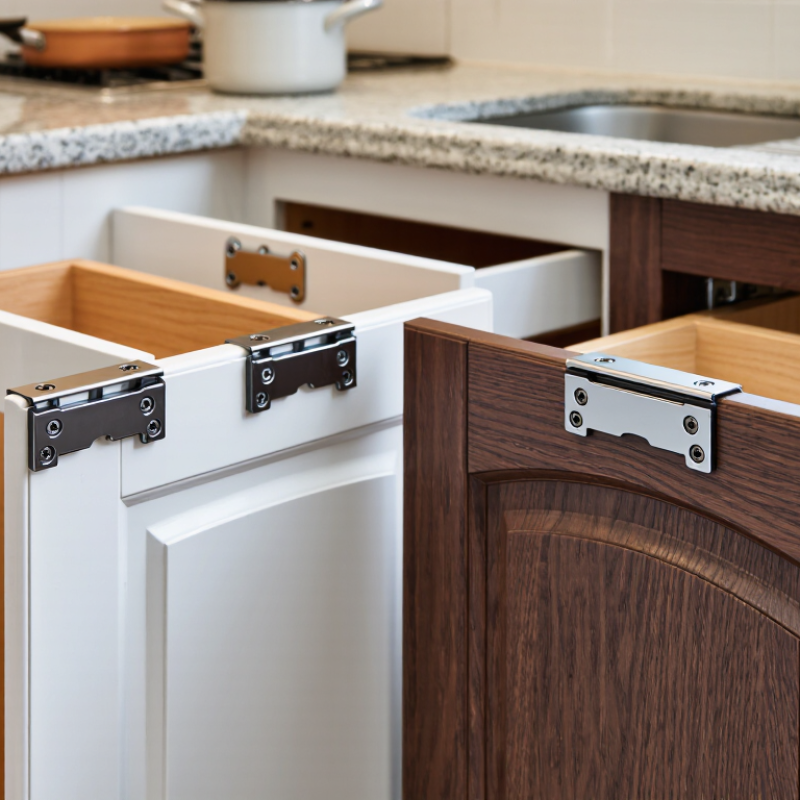
Choosing a cabinet door closer starts with mounting style, not appearance. A closer must match the cabinet’s construction and door position.
For frameless cabinets, concealed cup hinges usually fit inside the side panel. Face-frame cabinets may need overlay adapters or compact surface-mounted closers. Inset doors require tighter alignment and a smaller closing range. Measure the door overlay, panel thickness, and available clearance before ordering. Measure twice. A closer that rubs against a shelf will fail early, even when its load rating looks adequate.
Closing mechanism also changes daily performance. Spring closers shut quickly and suit light utility doors, but they can create a sharp impact. Hydraulic or damped closers control the final movement, reducing noise and stress around the hinge area. Magnetic catches provide holding force, yet they usually need a separate hinge or closer for controlled motion.
The Freedonia Group’s Cabinet Hardware industry analysis identifies replacement and renovation demand as important market drivers, while the 2024 U.S. Houzz Kitchen Trends Study reports that cabinet upgrades remain a frequent part of kitchen renovations. That demand makes compatibility more important than a low purchase price.
A useful field check is simple: open the door halfway, release it, and watch the final 50 millimeters. If it slams, stalls, or rebounds, the mechanism or mounting position needs reconsideration.
Some specifications look convincing on paper. Real doors can disagree.
A cabinet closer must match the door’s real load, not just its appearance. Measure the door’s height, width, thickness, and material. A solid oak door can weigh far more than a similar-sized hollow panel. Add the handle and any attached hardware. The total can change the selection.
Overlay matters too. Full-overlay doors place different leverage on the closer than inset doors. Check the manufacturer’s load rating for the complete door size, not one hinge alone. ANSI/KCMA A161.1 evaluates cabinet components through repeated-cycle and load testing. This supports a practical rule: choose hardware with capacity above the measured load. A small safety margin helps. Too much resistance, however, can make the door feel stiff.
In field installations, I have seen closers fail because installers measured width but ignored door weight. That mistake is easy to repeat. Manufacturer charts are useful, but they are not universal. Ratings may assume a specific number of closers, mounting position, or panel construction. Read those conditions carefully. I sometimes prefer testing one sample door before ordering a full set. It costs time, but replacement work costs more.
Choosing a cabinet door closer starts with the hinge, not the damper. A 35 mm cup hinge is the common concealed format for kitchen cabinetry. It fits a 35 mm bored cup and usually supports adjustable overlay, height, and depth. The cup depth still matters. A shallow door can split if the bore is too deep.
A 110° opening suits most wall and base cabinets. It gives practical access without demanding excessive side clearance. The 2024 U.S. Houzz Kitchen Trends Study reports that storage remains a major renovation priority, so access deserves equal attention. A 110° hinge works well beside adjacent doors and corner fillers. However, thick handles may collide sooner than expected. Measure the handle projection, not only the door width.
A 165° wide-angle hinge opens farther and exposes more shelf area. It is useful for corner cabinets, pull-out shelves, and appliance garages. It also needs careful clearance behind the door. EN 15570:2008 includes furniture-hinge endurance testing up to 80,000 opening cycles, but real performance depends on installation quality. That number is not a promise for every cabinet. I have seen a premium closer fail early after screws entered soft particleboard. Pilot holes, correct screw length, and even door alignment matter. Soft-close resistance should match the door mass. An overpowered closer can make a light door bounce; an undersized one may slam. Test the finished door repeatedly. Minor friction often reveals a larger geometry problem.
| Comparison Dimension | 35 mm Cup Hinge Standard 100°–110° Opening |
35 mm Cup Hinge 110° Opening |
35 mm Cup Hinge 165° Wide-Angle Opening |
|---|---|---|---|
| Primary Function | General cabinet door closing Suitable for everyday kitchen, bathroom, bedroom, and storage cabinetry. | Balanced opening and closing performance Provides a practical combination of access, stability, and compact hardware design. | Maximum door access Designed for doors that need to swing far beyond the normal cabinet opening range. |
| Cup Diameter | 35 mm | 35 mm | 35 mm |
| Nominal Opening Angle | Approximately 100°–110° | Approximately 110° | Approximately 165° |
| Typical Cup Boring Depth | Approximately 11.5–13 mm, depending on the hinge design | Approximately 11.5–13 mm, depending on the hinge design | Approximately 11.5–13 mm, depending on the hinge design |
| Common Cup Setback | Typically about 4–6 mm from the door edge; confirm the hinge drilling specification before installation | Typically about 4–6 mm from the door edge; confirm the hinge drilling specification before installation | Typically about 4–6 mm from the door edge; wide-angle mechanisms may require additional clearance |
| Best Door Overlay Applications | Full overlay, half overlay, or inset versions are available depending on the mounting plate and hinge arm | Full overlay, half overlay, or inset versions are available depending on the mounting plate and hinge arm | Usually selected for full-overlay or special-access layouts; verify compatibility with the cabinet construction |
| Access to Cabinet Interior |
★★★★☆ Good access for most everyday storage needs. |
★★★★☆ Very good access with a widely used opening angle. |
★★★★★ Excellent access for wide shelves, pull-out units, and corner cabinets. |
| Door-to-Door Clearance | Moderate clearance is required when adjacent doors or panels are present. | Moderate clearance is required; check the door thickness and overlay arrangement. | Greater swing clearance may be required to prevent contact with neighboring doors, walls, or handles. |
| Closing Action | Available with self-closing or soft-closing mechanisms. Closing speed depends on the hinge design, door weight, and adjustment. | Commonly available with integrated soft-close or clip-on soft-close options for controlled movement. | Soft-closing versions are available, but the wide-angle mechanism must be checked for smooth closing throughout the larger travel range. |
| Adjustment Range | Common adjustment categories include side-to-side, height, and depth; the exact range varies by mounting system. | Typically supports three-way adjustment when paired with a compatible adjustable mounting plate. | Three-way adjustment may be available, but installation tolerances and clearance checks are especially important. |
| Recommended Door Thickness | Often used with approximately 15–24 mm cabinet doors; verify the hinge manufacturer's drilling and load specifications. | Often used with approximately 15–24 mm cabinet doors; verify the hinge manufacturer's drilling and load specifications. | Door-thickness compatibility varies more widely because of the extended opening geometry; confirm before purchase. |
| Installation Difficulty |
★★☆☆☆ Straightforward when the cup position and mounting plate are accurately aligned. |
★★☆☆☆ Suitable for standard concealed-hinge installation procedures. |
★★★☆☆ Requires more careful clearance planning and alignment because of the larger opening angle. |
| Most Suitable Cabinet Locations | Wall cabinets, base cabinets, wardrobes, vanities, and general storage units. | Kitchens, bathrooms, offices, and furniture using standard cabinet layouts. | Corner cabinets, access panels, wide doors, appliance garages, and units requiring unobstructed access. |
| Main Advantages | Compact cup format, broad application range, easy replacement, and good availability of mounting options. | Familiar installation format, good interior visibility, balanced door movement, and strong general-purpose suitability. | Very wide access angle, reduced obstruction from the door, and improved access to deep or corner storage. |
| Potential Limitations | The door may restrict access to the cabinet interior more than a wide-angle hinge. | It may not provide enough clearance for certain corner layouts or extra-wide access requirements. | Requires more surrounding clearance and may be unsuitable where a wall, adjacent cabinet, or handle limits the swing. |
| Selection Priority | Choose when standard cabinet access, simple installation, and broad compatibility are the main priorities. | Choose when a reliable, everyday opening angle and controlled closing action are required. | Choose when maximum cabinet access is more important than compact swing clearance. |
| Overall Recommendation | Best for general-purpose cabinets | Best all-around choice | Best for wide-access applications |
Important: Hinge opening angle, overlay, drilling pattern, load capacity, door thickness, and soft-closing performance vary by hinge construction. Always verify the installation drawing and cabinet clearance before selecting a hinge.
How to Choose the Best Cabinet Door Closer?
A reliable cabinet door closer should be judged by tested performance, not a smooth showroom sample. ANSI/BHMA A156.9 provides recognized testing criteria for cabinet hardware. Check whether the closer is covered by the applicable section and product category. The report should identify the tested model, mounting method, door weight, and test conditions. A generic certificate is not enough.
Pay close attention to soft-close behavior during repeated operation. The door should move freely, engage the damping mechanism before contact, and close without bouncing or slamming. Ask for durability results from the required cycle testing. Inspect the hardware after testing for loose screws, oil leakage, cracked parts, or reduced closing control. Small details matter.
A practical evaluation should use a cabinet door similar to your real installation. Test light and heavy doors. Try different closing speeds. The closer may perform well on a narrow door but struggle with a wider panel. Alignment also matters; a crooked door can make a good closer appear defective. In my view, test reports should be read critically, because laboratory conditions rarely match a busy kitchen. Even the best result cannot replace checking installation tolerance, adjustment range, and long-term feel. A little resistance is acceptable. Harsh impact is not.
Verify Soft-Close Performance Through ANSI/BHMA A156.9 Testing Criteria
ANSI/BHMA A156.9 cabinet hardware endurance classifications commonly reference 100,000 cycles for Grade 1, 50,000 cycles for Grade 2, and 25,000 cycles for Grade 3. When evaluating a cabinet door closer, confirm that the soft-close mechanism continues to engage smoothly, control closing speed, and prevent slamming throughout the required cycle test.
A reliable cabinet door closer should match the door’s weight, size, and daily use. Do not judge performance by a smooth showroom demonstration alone. A closer may feel excellent when new, yet lose control after thousands of cycles.
Installation adjustment is equally important. Check whether the closing speed, final latching force, and holding position can be tuned separately. Small adjustment screws matter when doors vary by only a few millimeters. Install the closer on a square cabinet, then test the door from several opening angles. If the door slams at 20 degrees, the setting is not ready.
Tips: Record the door weight and cycle target before selecting hardware. Ask for test reports, adjustment instructions, and clear installation tolerances. Confirm whether the product has been tested for EN 15570 durability requirements, or whether the claim applies only to related hinge components. This distinction is easy to overlook. Request evidence from a competent testing laboratory, including load conditions, cycle count, and failure criteria.
Cycle life should reflect real use, not an impressive number without context. A kitchen door may open dozens of times daily. Commercial furniture can experience far heavier traffic. Choose a tested margin above your expected demand. Still, laboratory cycles cannot reproduce every dusty, uneven, or hurried installation. That limitation deserves attention. Observe the first sample in actual service, and inspect loosened screws, noise, rebound, and closing force after repeated use.
Measure the finished door’s height, width, thickness, and actual weight. Include the handle and attached hardware. Size alone can mislead.
A solid wood door may weigh much more than a hollow panel of equal size. Match the closer to measured load, not appearance.
Full-overlay and inset doors create different leverage. Confirm the overlay before comparing load ratings.
Choose capacity above the measured load. A modest safety margin helps. Excess resistance can make the door feel stiff.
Look for separate controls for closing speed, final latching force, and holding position. Small adjustments help when doors differ by a few millimeters.
Install it on a square cabinet. Test movement from several opening angles. If it slams near 20 degrees, adjust it again.
Ask for cycle counts, load conditions, failure criteria, and laboratory evidence. Confirm whether testing covers the complete closer system.
Match tested cycle life to real use. A kitchen door may open dozens of times daily, while commercial furniture may face heavier traffic.
Check for loosened screws, noise, rebound, and changing closing force. Dust and uneven installation can affect results. Laboratory testing is not perfect.
Usually, yes. Observe the sample in actual service before buying many units. It costs time, but replacement work may cost more.
Choosing the right Cabinet Door Closer requires more than selecting a convenient closing device. Begin by comparing mounting styles and closing mechanisms, then match the closer’s load rating to the door’s weight, size, and overlay. Compatibility with 35 mm cup hinges, standard 110° opening angles, or 165° wide-angle designs is also important for smooth movement and full access. These factors help ensure reliable performance and prevent excessive stress on the cabinet structure.
Soft-close quality should be evaluated through recognized ANSI/BHMA A156.9 testing criteria, including controlled movement and consistent final closure. Also consider installation adjustments such as closing speed, resistance, and alignment compensation. A dependable product should offer a suitable cycle-life rating and demonstrate durability in line with EN 15570 requirements. By reviewing these technical details together, users can select a Cabinet Door Closer that provides quiet operation, stable performance, simple installation, and long-term service.

Xianghui