Choosing the right Cupboard Door Lock is less about appearance and more about daily use, materials, and security needs. A lock that works well on a solid oak door may feel awkward on a thin laminated panel. The kitchen environment matters too. Steam, grease, and frequent handling can weaken unsuitable finishes or cause small mechanisms to stick.
This guide examines common lock types, including cam locks, sliding bolts, magnetic catches, and keyed options. It considers installation depth, door thickness, latch alignment, operating comfort, and resistance to corrosion. A useful choice should match the cupboard’s purpose. A bathroom cabinet may need moisture resistance, while an office cupboard may benefit from controlled key access. Manufacturer specifications remain important, but measurements taken on the actual door are even more valuable.
Small details matter.
A lock can look strong in a product photograph yet disappoint after installation. Loose screws, poor alignment, or a short tongue may reduce its practical performance. There is no universally perfect solution, and even experienced installers can overlook clearance around hinges. Readers should compare materials, check replacement-key availability, and test the mechanism before fixing it permanently. Reliable guidance also means recognizing limits: a cupboard lock is not a substitute for a professionally designed high-security system. With careful measurements and realistic expectations, you can select a Cupboard Door Lock that feels secure, operates smoothly, and suits the room for years.
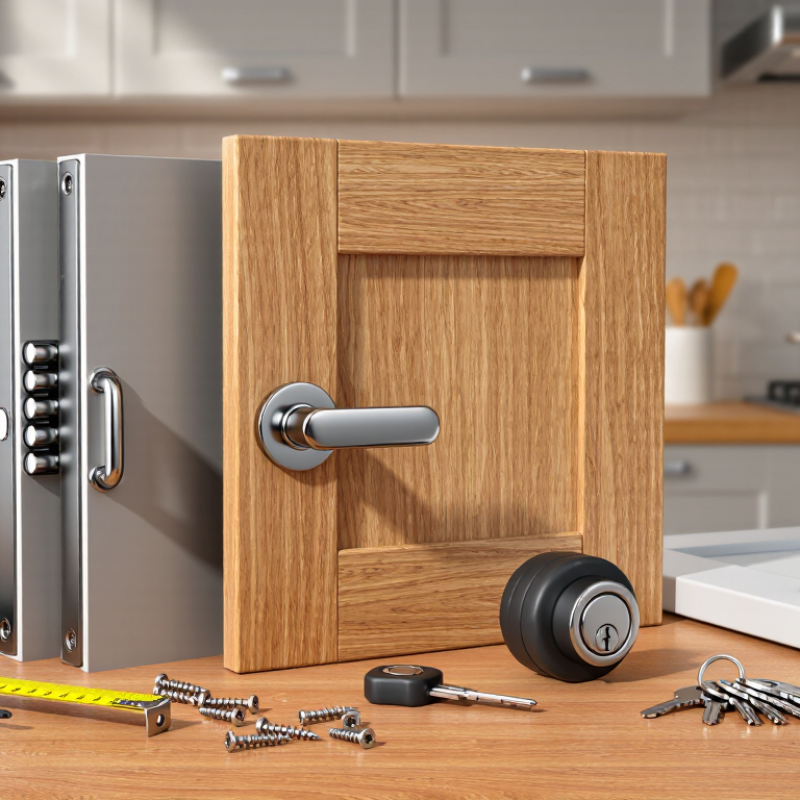
A cupboard door lock is a small device that keeps a cabinet closed and its contents protected. It usually includes a lock body, a rotating cam, and a key or turning knob. Some designs use a spring latch instead.
When the key enters the cylinder, its internal pins align and allow the plug to rotate. That movement turns the cam behind the door. The cam then catches the frame, holding the door shut. With a latch model, pressing or releasing the handle moves the bolt instead. The mechanism is simple, but accurate fitting matters.
I have seen a lock fail because the cam was only a few millimetres too short. Measure the door thickness and frame depth before choosing one. Check the lock’s mounting hole, cylinder length, and turning clearance. A metal body often handles repeated use better than thin plastic. Moisture-resistant materials suit kitchens and utility rooms. Sharp edges are a warning sign.
Choose a lock that matches the cupboard’s daily use. A key model offers controlled access, while a knob may be faster for frequent opening. For homes with children, select a secure design without exposed, breakable parts. Avoid forcing the key. I once focused too much on appearance and overlooked alignment. That was a poor choice. The best lock should turn smoothly, close firmly, and remain easy to inspect.
Choosing the right cupboard door lock starts with understanding the available types. Each design suits a different door, material, and security need.
Cam locks are common for wooden, metal, and office cupboards. A key turns a metal cam behind the door, securing it against the frame.
Sliding bolt locks are simple and durable, especially for workshop storage. They need enough space behind the door for the bolt to move.
Magnetic locks offer a cleaner appearance and work well on modern cabinets. However, they may feel less secure if the magnet is weak or poorly aligned.
Push-to-open catches have no visible handle. They are convenient for smooth, handle-free cupboards, but they are not suitable when firm locking is essential.
Child-resistant locks add an extra barrier inside household cabinets. They should be checked regularly for wear.
Tips: Measure the door thickness and frame gap before buying. Test the lock with the door slightly misaligned. This small check prevents frustration later.
Choose stainless steel or coated metal for damp areas. Plastic parts can become brittle over time.
In my own fitting work, I have found that a lock can be strong but still inconvenient when its key is difficult to grip. That detail is easy to overlook.
Also, avoid choosing by appearance alone. A neat lock is not always the most practical one.
Matching a lock to a cupboard door starts with the door itself. Check whether it is inset, overlay, framed, or frameless. An inset door needs a compact lock body and careful clearance. An overlay door usually allows more installation space. Measure the door thickness, frame depth, and gap around the edge. Measure twice.
The lock must also suit the door material. Thin plywood may need a backing plate to prevent cracking. Solid wood can accept screws more securely, but pre-drilling still helps. For glass or delicate panels, avoid drilling unless the panel is designed for hardware. A surface-mounted latch may be safer. Check the latch length too. It should engage the strike plate without forcing the door.
Consider how the cupboard will be used each day. A pantry may need a firm latch, while a display cabinet may need a low-profile fitting. In a workshop, dust can affect small moving parts, so choose a simple mechanism with protected openings. I once installed a lock without checking the hinge swing. The key turned, but the door could not open fully. That mistake was avoidable. Test the lock in its final position before tightening every screw. Leave room for fingers, shelves, and nearby handles. Small details matter.
Match the lock style to the cupboard door material and its typical panel thickness. Thinner glass and metal doors generally need surface-mounted or clamp-style locks, while wood-based doors can accommodate cam locks or concealed cabinet locks.
Typical panel thicknesses are shown for comparison only. Always verify the actual door thickness, available installation depth, edge clearance, and lock body dimensions before purchasing.
Choosing a cupboard door lock starts with the contents, not the lock’s appearance. A kitchen drawer needs different protection from a document cabinet. For valuable items, choose a lock with a strong metal body, a protected cylinder, and a bolt that reaches the frame securely. Test the door first. Thin panels may flex, making an expensive lock less effective. In humid rooms, corrosion-resistant materials matter. A stiff key after several weeks is not a small inconvenience; it can signal poor alignment or moisture damage.
Convenience should support security, not weaken it. Keyed locks work without batteries, while keypad or electronic models can provide faster shared access. If you choose electronic access, check battery warnings, emergency entry, and reset procedures before installation. A lockout is frustrating. Consider who uses the cupboard daily. Large buttons help when hands are wet, and a clear status indicator prevents repeated guessing. For offices, an access log may improve accountability, but only if someone reviews it. I have seen users leave a secure cabinet unlocked because the lock was too slow. That failure deserves attention. No lock is perfect.
Tips: Measure the door, frame, and back clearance. Check the lock cycle rating and installation instructions. Use a qualified installer for misaligned or heavy doors. Keep a spare key in a controlled place, never taped beneath the cabinet. Review the lock after a month and ask whether it remains secure, smooth, and easy to use.
| Lock Type | Typical Security Level | Best Use | Convenience Features | Installation Requirements | Key or Access Management | Important Considerations |
|---|---|---|---|---|---|---|
| Cam Lock | Basic to moderate; suitable for deterring casual access | Office cabinets, storage units, drawers, and light-duty cupboards | Simple quarter-turn operation; available with keyed or tool-operated options | Usually requires a drilled mounting hole and sufficient clearance behind the door | Keys must be controlled; keyed-alike versions can reduce the number of keys needed | Check cylinder length, door thickness, cam direction, and strike clearance before purchase |
| Tubular or Pin-Tumbler Cabinet Lock | Moderate; generally offers better resistance to simple picking than basic tool-operated locks | Residential cupboards, personal storage, and general-purpose cabinets | Familiar key operation and positive locking feedback | Requires accurate hole positioning and a compatible latch or cam | Keep spare keys secure; rekeying availability depends on the lock design | Select corrosion-resistant materials for kitchens, workshops, and humid areas |
| Multipoint Cabinet Lock | Moderate to high; secures more than one point along the cabinet door | Tall cabinets, metal storage cupboards, and doors that may flex or bow | One operation can engage several locking points | Needs careful alignment, adequate internal space, and stronger installation support | Usually managed with a key, handle, or central cylinder depending on the configuration | More complex to install and maintain; verify rod length and door geometry |
| Electronic Keypad Lock | Moderate to high when paired with a strong cabinet and concealed latch | Shared offices, staff cupboards, and locations requiring code-based access | No physical key required; some models support temporary or user-specific codes | Requires battery space, correct door thickness, and sometimes a backup access method | Codes can be changed without replacing the lock; access records depend on the model | Check low-battery warnings, emergency override procedures, and weather resistance |
| RFID or Smart Cabinet Lock | Moderate to high; access control depends on credential protection and system configuration | Hotels, healthcare storage, workplaces, and managed-use cabinets | Contactless access; selected systems support user permissions and audit trails | May require batteries, a control unit, software setup, or network connectivity | Cards, tags, mobile credentials, or administrator-managed accounts may be used | Consider privacy, cybersecurity, offline operation, data retention, and replacement costs |
| Magnetic Catch or Push Lock | Low; intended mainly to keep a door closed rather than prevent forced entry | Decorative cupboards, household storage, and child-resistant furniture when appropriately designed | Fast, keyless access and a clean appearance with minimal visible hardware | Usually surface-mounted or recessed with simple alignment requirements | No keys or batteries required | Do not use where valuables, hazardous materials, or confidential documents require real locking security |
| Sliding-Door Hook or Crescent Lock | Basic to moderate, depending on the body, hook strength, and door construction | Sliding glass, wood, or metal cupboard doors | Designed specifically for overlapping or sliding panels | Requires accurate panel spacing and sufficient overlap for the hook or latch | Commonly key-operated; spare-key control remains important | Measure panel thickness, overlap, and offset carefully to prevent binding |
A cupboard door lock should match the door material, thickness, and daily use. A light wooden door may need a simple cam lock, while a heavier cabinet requires stronger hardware. Measure the door thickness and available clearance before buying. Check that the key turns freely without touching shelves or hinges. I once ignored this small detail and had to reposition the lock.
Installation needs patience and accurate marking. Remove the door if possible, then mark the lock center with a pencil and square. Drill slowly from both sides to reduce splintering. Keep the drill level. Fit the lock body, cam, washer, and nut in the correct order. Tighten the nut firmly, but do not crush the wood. Test the key before closing the door. A slightly misaligned cam can make a new lock feel faulty.
Maintenance is simple but regular. Wipe dust from the keyway and apply a suitable dry lubricant when movement becomes stiff. Avoid forcing the key or using excessive oil, which can collect dirt. Inspect loose screws, cracked wood, and worn cam edges every few months. Replace the lock when the cylinder sticks, the cam bends, or security becomes uncertain. Record the lock size before removal. That step seems minor, yet it prevents an unnecessary second purchase. Dispose of the old hardware responsibly.
It is a small device that keeps a cabinet door closed. Common parts include a lock body, cam, key, or turning knob. Some models use a spring latch instead.
The key turns an internal plug after its pins align. That movement rotates a metal cam behind the door. The cam catches the frame. Accurate fitting matters.
Cam locks suit many wooden and metal cupboards. Sliding bolts work well in workshops with enough rear clearance. Magnetic locks offer a cleaner appearance. Push-to-open catches suit handle-free doors, not firm security needs.
Measure the door thickness and frame depth. Check the mounting-hole size and cylinder length. Also measure turning clearance near shelves and hinges. A few millimetres matter.
Coated metal or stainless steel suits kitchens and utility rooms. Moisture can weaken thin plastic parts over time. Inspect edges carefully. Sharp edges are warning signs.
Remove the door if possible. Mark the centre with a pencil and square. Drill slowly from both sides to reduce splintering. Keep the drill level. Do not crush the wood.
Wipe dust from the keyway regularly. Use a suitable dry lubricant when movement becomes stiff. Avoid excessive oil because it can collect dirt. Check screws, wood, and cam edges every few months.
Replace it when the cylinder sticks or the cam bends. Replacement is also sensible when security feels uncertain. Record the lock size before removal. That small step prevents another purchase. I once overlooked it.
Choosing the right Cupboard Door Lock starts with understanding how it works. A lock secures a cupboard by holding the door closed through a latch, bolt, catch, or magnetic mechanism, depending on the design. Common options include cam locks, sliding bolts, push-to-open locks, magnetic catches, and child-resistant systems. The best choice depends on the door’s material, thickness, opening direction, cupboard location, and the level of security required.
When comparing a Cupboard Door Lock, consider more than basic protection. Look for convenient operation, suitable key or keyless access, strong construction, smooth alignment, and resistance to daily wear. Installation should be based on accurate measurements and secure fixing, while regular cleaning and tightening can help maintain reliable performance. If a lock becomes loose, damaged, or difficult to operate, replacing it with a compatible model can improve both safety and convenience. A carefully matched lock provides practical access control without interfering with the cupboard’s appearance or everyday use.

Xianghui