10 Tips for Choosing Wardrobe Door Fittings

Time:2026-10-16 Author:Liam
0%

Choosing the right Wardrobe Door Fittings can change how a room feels and functions. A smooth-running door, quiet closing action, and secure handle make daily use noticeably easier. However, attractive hardware does not always perform well after months of opening, closing, dust, and changing humidity.

This guide shares ten practical tips based on common installation experience and established furniture hardware principles. It considers door weight, material, opening style, available space, adjustment range, and long-term maintenance. Small details matter. A soft-close hinge may suit a compact bedroom door, while a heavier sliding panel needs stronger rollers and a stable track. Measure carefully before ordering. A few millimetres can affect alignment, clearance, and movement.

Reliable Wardrobe Door Fittings should match the cabinet structure, not merely the room’s decoration. Check manufacturer load ratings, installation instructions, and replacement-part availability. These details support safer decisions and reduce avoidable repairs. Still, no fitting choice is perfect for every wardrobe. A fitting that works beautifully on a lightweight MDF door may struggle with solid timber. That distinction is easy to miss.

Look closely at the edges.

The following tips will help compare options with greater confidence. They also encourage a practical review of personal priorities, because budget, appearance, durability, and installation skill rarely align perfectly. Careful selection creates a wardrobe that feels solid in the hand and dependable over time.
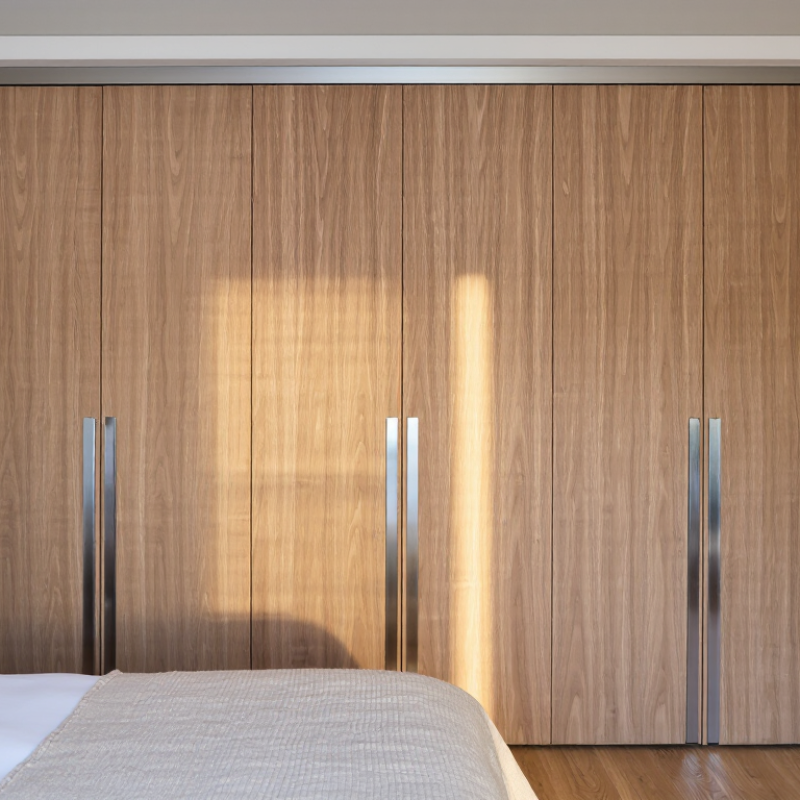
10 Tips for Choosing Wardrobe Door Fittings

Understanding Wardrobe Door Fitting Types and Their Functions

Choosing wardrobe door fittings starts with understanding how each door moves. Hinged doors use hinges, mounting plates, and a handle. They swing outward, so allow clearance beside the wardrobe. Sliding doors depend on top tracks, bottom guides, rollers, and anti-jump devices. Their fittings carry weight and control travel. Folding doors combine hinges with a track or pivot set. They suit narrow rooms, although alignment can become demanding. Pivot doors rotate around top and bottom pivots. They need accurate drilling and a strong cabinet frame.

Match the fitting to door weight, thickness, and material. Check the load rating, not just the appearance. Soft-close hinges reduce slamming through a small damper. Sliding systems may use hydraulic soft closers for quieter stopping. Handles provide grip, while recessed pulls prevent collisions in tight passages. Magnetic catches keep hinged doors shut. Adjustable hinges help correct uneven gaps after installation. A three-millimetre gap may look minor, but repeated rubbing can damage an edge. Alignment matters.

Measure twice, especially the track length and hinge cup position. I once trusted a rounded measurement and created a visible gap near the floor. It was fixable, but frustrating. Use a level, firm screws, and suitable wall anchors. Test every door slowly before fitting trim. Listen for scraping. If rollers feel rough, inspect debris, alignment, and load limits. Cheap-looking fittings are not always weak, and expensive ones are not automatically suitable. The best choice fits the door, room, and installer’s skill.

10 Tips for Choosing Wardrobe Door Fittings: Understanding Fitting Types and Their Functions

Use this chart as a practical selection checklist. A value of 1 indicates that the fitting commonly performs the listed primary function, while 0 indicates that it does not. Before choosing, check door weight, material, opening style, available space, adjustment options, durability, installation requirements, safety, maintenance, and compatibility with the wardrobe structure.

Measuring the Wardrobe and Identifying Installation Requirements

Accurate measurements shape every wardrobe fitting decision. Measure the opening at the top, middle, and bottom. Walls are rarely perfectly straight. Record the narrowest width, not the most convenient one. Measure the height beside both edges and through the centre. A difference of only five millimetres can affect door alignment.

Check the wall, floor, and ceiling before selecting hinges, tracks, or handles. Use a spirit level to find uneven surfaces. Inspect skirting boards, nearby drawers, and lighting switches. They may reduce the door’s opening space. For hinged doors, confirm the hinge-side clearance and the required swing area. Sliding doors need enough depth for overlapping panels, guides, and rollers. Measure the wardrobe’s internal depth too. A fitting can look suitable but fail inside a shallow cabinet.

I once measured only the front opening and overlooked a raised floor edge. The doors fitted, but the bottom guide needed adjustment. That mistake taught me to inspect the whole installation area. Record every dimension in millimetres, and label each measurement clearly. Take photographs of corners and obstructions. Check the expected door weight against the fitting’s rated capacity. Follow the supplied installation instructions, even when the process seems familiar. If the cabinet is uneven, correct the structure before installing hardware. Small errors become visible quickly. A second measurement is usually worthwhile.

Comparing Materials, Load Capacity, and Durability

10 Tips for Choosing Wardrobe Door Fittings

Material affects weight, corrosion resistance, and service life. Steel fittings usually offer higher stiffness than aluminum, while zinc alloy provides accurate casting for compact rollers. Stainless steel suits humid rooms, but it costs more. Plastic guides reduce noise, yet they may deform under heat or heavy doors. Choose matching screws, tracks, and rollers, not isolated parts.

Load capacity needs a margin. A 60-kilogram door should not use fittings rated for exactly 60 kilograms. I prefer at least a 25% reserve, although real installations vary. ANSI/BIFMA X5.9-2019 evaluates storage-unit strength, stability, and durability, but it does not replace the fitting supplier’s load test. ISO 7170 also uses defined loads and repeated operation, offering a useful comparison method. Ask for tested capacity, cycle results, and installation conditions. Paper ratings can mislead.

Durability depends on alignment and cleaning. A track collecting grit can damage rollers within months. Look for sealed bearings, replaceable wheels, adjustable hangers, and corrosion-resistant finishes. EN 15706 addresses strength and durability testing for sliding-door hardware. My own mistake was choosing a strong roller with a weak guide. The door still failed. Check door weight, width, opening frequency, humidity, and fixing substrate before purchase. A fitting may survive laboratory cycles but perform poorly on a twisted cabinet. That detail deserves more attention.

Selecting Fittings for Door Style, Space, and Daily Use

10 Tips for Choosing Wardrobe Door Fittings

Selecting Fittings for Door Style, Space, and Daily Use

Start with the door style. Hinged doors need sturdy hinges, while sliding doors require tracks, rollers, and soft-close units. Measure the panel’s height, width, and weight before choosing any fitting. A lightweight MDF door may need different hardware from a solid timber panel. Check the manufacturer’s load rating carefully. Do not guess here.

Study the available space. Sliding doors save floor space, but they need clear wall access and accurate track alignment. Hinged doors need enough room to open beside a bed, desk, or chair. Choose handles that match the door thickness and feel comfortable in daily use. Recessed pulls suit narrow walkways. Larger handles help children and older users. Test the grip if possible.

Daily movement reveals weak choices quickly. Select corrosion-resistant fittings for humid rooms and smooth rollers for frequent opening. Soft-close mechanisms reduce noise and protect the cabinet frame. Confirm that replacement parts remain accessible, because even reliable fittings can wear. I once accepted a slightly loose hinge during installation. It became irritating within weeks. Small movement matters. Check screw depth, door clearance, and adjustment range before final installation. A fitting can look elegant yet feel awkward after twenty openings a day.

Checking Compatibility, Safety Features, and Maintenance Needs

10 Tips for Choosing Wardrobe Door Fittings

Begin with compatibility. Measure door thickness, weight, height, and opening clearance. Check hinge cup size, screw positions, and mounting plate alignment. Sliding doors need matching track capacity and roller dimensions. ISO 7170:2023 covers storage-unit strength and durability testing, so ask suppliers for relevant test evidence. Do not trust appearance alone. I once fitted attractive hinges that rubbed after seasonal humidity changes.

Safety deserves practical attention. Select soft-close fittings with controlled movement, anti-jump devices, and secure track stops. Check whether the cabinet requires wall anchoring. The U.S. Consumer Product Safety Commission reported 84,100 furniture tip-over injuries treated in emergency departments from 2017 to 2021. A wardrobe door cannot prevent every hazard, but stable installation reduces avoidable movement. Keep finger gaps clear, especially in children’s rooms. Test the door slowly.

Maintenance needs should shape the purchase. Choose adjustable fittings when floors or walls are uneven. Prefer corrosion-resistant components in humid bedrooms. Inspect screws, rollers, seals, and closing force every six months. Remove dust from tracks with a soft brush, not excessive oil. Record unusual noise early. My own mistake was delaying a loose roller; the door later dragged heavily. Product instructions matter, yet real rooms are imperfect. Leave adjustment access, and confirm replacement parts remain available. Reliability is easier when maintenance is simple.

FAQS

How should I choose fittings for hinged wardrobe doors?

Choose sturdy hinges matched to the door’s weight and thickness. Measure the hinge cup, screw positions, and mounting plate. Leave enough clearance beside beds, desks, or chairs. Test the opening path before installation.

What fittings do sliding wardrobe doors need?

Sliding doors need compatible tracks, rollers, soft-close units, and track stops. Match every part to the panel’s weight. Check track alignment carefully. Small errors cause dragging.

How can I check fitting compatibility?

Measure the door height, width, thickness, and weight. Confirm the track capacity or hinge load rating. Check roller dimensions and screw depth. Do not rely on appearance alone.

Which handle style works best in a narrow room?

Recessed pulls suit narrow walkways because they reduce snagging. Larger handles can help children and older users. Match the handle to the door thickness. Test the grip before buying.

Are soft-close fittings worth choosing?

Soft-close units reduce noise and protect the cabinet frame. They also control sudden movement. Test the closing speed slowly. Some mechanisms feel too weak after repeated use.

What safety features should wardrobe doors include?

Choose anti-jump devices, secure track stops, and controlled closing. Keep finger gaps clear, especially in children’s rooms. Anchor the cabinet when necessary. Stable installation reduces avoidable movement.

Which fittings suit humid rooms?

Choose corrosion-resistant hinges, rollers, screws, and other components. Humidity can change door movement over time. Inspect parts after seasonal weather changes. Attractive fittings may still rub later.

How often should wardrobe door fittings be maintained?

Inspect screws, rollers, seals, and closing force every six months. Remove track dust with a soft brush. Avoid excessive oil. Record unusual noise early.

Why should replacement parts be considered before purchase?

Even reliable fittings can wear after frequent daily movement. Confirm that rollers, hinges, or soft-close units remain available. Leave adjustment access during installation. I once delayed a loose roller, and the door later dragged heavily.

Conclusion

Choosing the right Wardrobe Door Fittings is essential for creating a wardrobe that works smoothly, safely, and efficiently. Start by understanding the main fitting types and their functions, such as hinges, sliding systems, handles, tracks, and soft-closing mechanisms. Accurate measurements of the wardrobe, door panels, available space, and installation area will help determine the correct fitting size and configuration. It is also important to compare materials, load capacity, corrosion resistance, and overall durability to ensure the fittings can withstand regular use.

The best fittings should match the door style, room layout, and daily habits. Sliding doors may suit compact spaces, while hinged doors can provide wider access. Before purchasing, check compatibility between all components and consider safety features that reduce pinching, sudden movement, or door derailment. Finally, review maintenance requirements, including cleaning, lubrication, adjustment, and replacement access. A thoughtful selection process will improve appearance, functionality, longevity, and user convenience.


Liam

Liam

Liam is a dedicated marketing professional with a profound expertise in the industry, where he excels at highlighting the unique advantages of our core products. With a keen understanding of market trends and consumer needs, Liam frequently updates our company’s professional blog, providing......