How Can Global Buyers Find Top Cabinet Co in China?

Time:2026-10-11 Author:Sienna
0%

Finding a reliable Cabinet Co in China requires more than comparing glossy catalogs and low quotations. Global buyers must examine production capability, material control, communication, and after-sales responsibility. China remains a major force in furniture manufacturing. CSIL’s World Furniture Outlook 2024 identifies China as the world’s largest furniture producer and a leading furniture exporter. ITC Trade Map data also places China among the world’s strongest exporters of wooden and household furniture.

The opportunity is substantial. The risk is real.

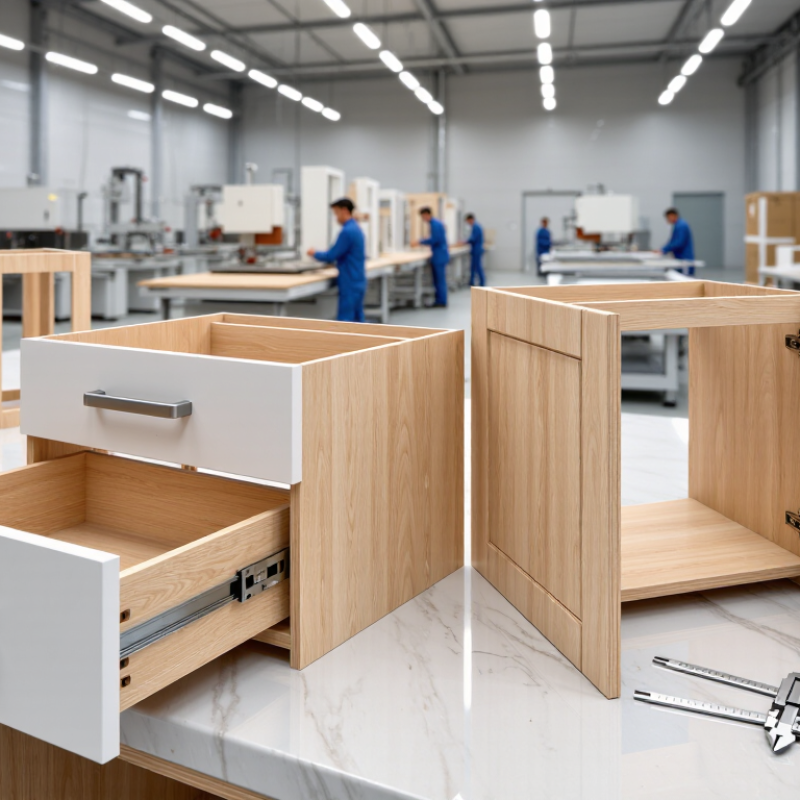
A professional sourcing process should begin with product evidence. Request factory videos, recent project references, material specifications, and sample cabinets with visible joints. Inspect edge banding, hinge alignment, drawer movement, surface consistency, and packaging protection. A trustworthy Cabinet Co should explain its panel grade, formaldehyde emission class, hardware brand, moisture resistance, and quality inspection steps clearly. Vague answers deserve attention.

Certifications help, but they do not prove everything. Buyers should verify certificates through issuing organizations and confirm whether they cover the actual factory and product. The International Trade Centre recommends using structured trade data and supplier due diligence when evaluating international sourcing markets. That principle applies here. Compare several factories using the same drawings, quantities, Incoterms, tolerances, and delivery requirements. Otherwise, the cheapest offer may simply exclude essential details.

Experience also matters. A supplier that understands container loading, installation instructions, replacement parts, and regional building practices can prevent expensive surprises. Still, no factory is perfect. Even a capable manufacturer may misunderstand one dimension or finish code. Clear drawings, approved samples, staged inspections, and written corrective procedures make that weakness manageable. The strongest global buying decision is not the lowest quote. It is the most verifiable one.

How Can Global Buyers Find Top Cabinet Co in China?

Define What Makes a Top Cabinet Company in China

A top cabinet company in China is not defined by a polished showroom alone. It should combine proven production experience, stable materials, and clear evidence of quality control. During a factory review, global buyers should inspect panel storage, cutting accuracy, edge sealing, and hardware installation. Look for dry, organized warehouses. Ask how moisture levels are checked before panels enter production. A reliable supplier can explain tolerances, inspection points, and remedies without vague promises. Real competence appears in small details.

Technical ability matters because cabinets must fit different rooms, climates, and installation habits. A capable company should provide accurate shop drawings, sample approvals, packing plans, and export documentation. Its engineers should understand material behavior, load limits, finish consistency, and the difference between a prototype and mass production.

Independent testing or recognized certifications can support these claims, but paperwork should match the actual factory process. Buyers should compare finished samples with shipped goods, not only photographs. This check often reveals uneven gaps or weak edge bonding. Proof beats promises.

Authority grows through traceable projects, qualified staff, and transparent communication. Request references for similar cabinet types and ask how problems were handled. A trustworthy company records changes, confirms deadlines, and reports defects before loading. Still, no factory is perfect. One weakness may be slow feedback during busy seasons. That matters. A better evaluation allows room for correction, rather than believing confident sales language. The strongest partner welcomes audits, documents limitations, and protects consistency after the first order.

Research China’s Main Cabinet Manufacturing Regions

China’s cabinet industry is concentrated in several manufacturing regions, each with different strengths. Guangdong, especially Foshan, offers mature supply chains for kitchen cabinets, wardrobes, hardware, and surface finishes. Factories there often support custom sizes and export packaging. Zhejiang is known for efficient woodworking production and practical furniture design. Ningbo and nearby cities also provide convenient shipping connections.

Jiangsu has strong capabilities in engineered panels, precision processing, and large-scale production. This can suit buyers ordering standardized cabinet collections. Shandong and Sichuan also contain capable manufacturers, though their export experience may vary between factories. Distance matters. An inland supplier may offer competitive prices, but transportation can add time and handling risks.

Region selection should follow the project, not assumptions. Buyers should inspect panel density, edge sealing, drilling accuracy, and moisture resistance. Ask for recent inspection records and samples made from the same materials. A polished sample can hide inconsistent mass production. That happens.

Factory visits reveal useful details. Check dust control, storage conditions, worker safety, and packaging methods. Confirm whether production is performed in-house or subcontracted. Request clear tolerances, material specifications, and delivery procedures. Regional expertise helps, but factory discipline matters more. Even experienced buyers can overlook communication delays, replacement parts, or installation instructions. A reliable cabinet partner should explain these weaknesses before the order is finalized.

Verify Manufacturer Credentials, Quality, and Production Capacity

How Can Global Buyers Find Top Cabinet Co in China?

A reliable cabinet manufacturer should prove more than a polished website. Request its business license, factory address, export records, and product certifications. Check whether the legal entity matches the payment account and contract details. A live video tour can reveal useful facts, including raw material storage, assembly lines, and finished-goods areas. Still, video evidence is limited. An independent factory audit provides stronger confirmation.

Quality must be measured with clear specifications, not general promises. Ask for material samples, moisture-control data, edge-banding standards, hardware test results, and inspection records. Compare approved samples with cabinets from current production. Check door alignment, surface consistency, drilling accuracy, and packaging strength. A small trial order can expose recurring defects before a larger commitment. Inspection should happen during production, not only before shipment.

Production capacity requires practical evidence. Review monthly output, active orders, equipment lists, staffing levels, and typical lead times. Ask how the factory handles peak seasons, replacement parts, and design changes. A capable supplier should explain its quality-control checkpoints without hesitation. Contact recent business references when possible. One warning sign is an impressive capacity claim with no production schedule behind it. No factory is perfect. Even experienced buyers sometimes overlook communication delays or packaging damage. Record these risks, assign corrective actions, and keep approval documents for every batch.

Compare Products, Prices, Customization, and Export Services

Finding a top cabinet company in China requires more than comparing catalog photos. Product quality starts with board density, edge sealing, hardware cycles, and moisture resistance. Request samples with the same specifications as your planned order. Check dimensions with calipers, inspect corner joints, and open every drawer. The China National Furniture Association reported furniture exports of about RMB 403.7 billion in 2023. This shows strong manufacturing capacity, but export volume does not guarantee consistent quality.

Price comparisons should use the same materials, hardware, packaging, and delivery terms. A cabinet priced at USD 90 may exclude soft-close hinges, inner fittings, or export-grade cartons. Ask for a detailed quotation and compare FOB, CIF, and door-to-door costs separately. Customization also needs written control. Confirm drawings, color codes, tolerances, lead times, and approval samples. According to UN Comtrade trade classifications, wooden kitchen furniture remains a major international product category, making supplier documentation especially important. The numbers help, but they cannot replace factory checks.

Tips: Request a video inspection of production and packing. Verify test reports with the issuing laboratory. Ask how defects are recorded and replaced. Export service matters too. Confirm container loading plans, pallet sizes, fumigation documents, labeling, and customs support. I have found that fast replies can hide weak process control. That is an uncomfortable point. Treat vague answers as data, not reassurance. A short pilot order may cost more initially, yet it exposes problems before a full container does.

Evaluate Samples, Communication, Contracts, and After-Sales Support

How Can Global Buyers Find Top Cabinet Co in China?

A reliable cabinet company should prove quality before discussing large orders. Request samples made with the same board, edge banding, hinges, and finish as production units. Check door alignment, drawer movement, surface consistency, and odor in a ventilated room. Measure panels with a caliper, not only by eye. Photos can hide uneven gaps. A small sample may also be better finished than a factory batch, so ask for production-line videos and independent inspection access.

Communication reveals operational discipline. Confirm drawings, color codes, hardware models, packaging details, and delivery dates in writing. Clear suppliers answer technical questions directly and admit limitations. Vague replies create expensive misunderstandings. The contract should define material grades, size tolerances, inspection procedures, payment stages, warranty coverage, spare parts, and remedies for defects. Local commercial advice may be useful because contract practices differ across markets.

Tips: Send one approved specification sheet. Record every change by email. Ask who handles complaints after delivery. A dependable team should provide replacement parts, installation guidance, and a realistic response time. Test this support before ordering. Request a sample hinge or panel replacement and observe the process. No checklist is perfect. Even careful buyers can miss moisture changes during shipping, so improve the agreement after each trial order.

How Can Global Buyers Find Top Cabinet Co in China? - Evaluate Samples, Communication, Contracts, and After-Sales Support

Evaluation Dimension What to Check Objective Evidence or Benchmark Recommended Verification Method Suggested Weight Warning Signs
Sample Accuracy Whether the sample matches the approved drawings, dimensions, materials, colors, hardware, and finish. All critical dimensions and specifications are recorded in an approved sample sheet with measurable tolerances. Use calipers, tape measures, color references, and a signed approval checklist before mass production. 15% The supplier asks for verbal approval only or changes materials without written confirmation.
Material Quality Panel type, thickness, edge banding, veneer or laminate, adhesive, fittings, and moisture resistance. Material names, thicknesses, grades, and applicable formaldehyde or emissions documentation are listed in the specification. Request material declarations, test reports where relevant, and a pre-production sample using the same materials. 12% The sample uses better materials than the proposed production specification.
Construction and Function Door alignment, drawer operation, joint strength, load capacity, soft-close function, and installation design. Doors and drawers operate smoothly; joints remain stable during repeated opening, closing, and reasonable load testing. Conduct a physical inspection and document test results with photographs or short videos. 12% Uneven gaps, loose fittings, sharp edges, unstable cabinets, or unclear installation instructions.
Factory and Quality System Production capacity, process control, inspection procedures, equipment, traceability, and subcontracting practices. A documented quality-control process covers incoming materials, in-process checks, final inspection, packing, and corrective action. Arrange a live or third-party factory audit and confirm whether production is performed in-house or subcontracted. 12% The facility cannot show inspection records, process controls, or a clear production location.
Communication Quality Response speed, technical understanding, document accuracy, language clarity, and escalation procedures. Questions are answered in writing with consistent specifications, revision numbers, responsibilities, and deadlines. Use a trial request for quotation and score response completeness, turnaround time, and handling of technical changes. 10% Frequent misunderstandings, missing drawings, unexplained price changes, or reliance on informal messages.
Quotation Transparency Product price, tooling, packaging, inspection, inland transport, export documentation, and payment-related charges. The quotation identifies currency, validity period, inclusions, exclusions, minimum order quantity, lead time, and delivery term. Compare at least three itemized quotations using the same specification and delivery term. 8% An unusually low price is offered without a clear explanation of materials, packaging, or logistics costs.
Contract Completeness Product specifications, approved samples, tolerances, inspection rights, delivery obligations, payment terms, and remedies. The contract incorporates drawings, bills of materials, packaging requirements, quality standards, and a clear change-control process. Have the agreement reviewed by qualified legal or trade professionals before signing. 12% Important terms exist only in chat messages, or the contract does not define acceptance and rejection procedures.
Delivery and Incoterms Production schedule, shipment readiness, export responsibility, risk transfer, insurance, and required documents. The purchase contract states the agreed Incoterms® 2020 rule, named place, shipment date, and document responsibilities. Confirm the term with the freight forwarder and verify commercial invoice, packing list, transport document, and origin documents as applicable. 8% The seller uses an unclear delivery term or cannot explain when risk and costs transfer.
Pre-Shipment Inspection Inspection timing, sampling method, defect classification, packaging checks, quantity, and loading condition. Inspection criteria are agreed before production, and payment or shipment is linked to documented results where appropriate. Use an independent inspection service or an approved internal inspection team before final payment. 8% Inspection is refused, postponed until after shipment, or limited to counting cartons only.
Packaging and Protection Carton strength, corner protection, moisture control, labeling, palletization, and suitability for the selected transport mode. Packaging specifications identify protective materials, carton markings, product identification, and handling instructions. Approve a packed sample and perform a packaging review before container loading. 5% Thin packaging, mixed labels, missing carton identification, or no protection for edges and hardware.
After-Sales Support Response channel, warranty coverage, replacement parts, claim handling, technical support, and compensation process. A written warranty and claim procedure defines response time, required evidence, replacement responsibility, and resolution deadlines. Test the support process with a written hypothetical claim before placing the order. 10% No warranty document, unclear spare-parts policy, delayed replies, or refusal to record complaints.
Total Evaluation Score Combine the weighted results from samples, communication, contracts, logistics, inspection, and after-sales service. Use a 100-point scorecard and require all critical quality and contractual requirements to pass, even if the total score is high. Shortlist suppliers that achieve at least 80 points and pass the sample, contract, and inspection gates. 100% A supplier receives a high commercial score but fails mandatory safety, quality, documentation, or service requirements.
Suggested decision rule: Select a supplier only after written sample approval, contract confirmation, pre-shipment inspection, and verification of a practical after-sales process.

FAQS

What defines a top cabinet manufacturer in China?

A polished showroom is not enough. Look for stable materials, accurate production, and documented quality checks. Small details matter, such as dry panel storage and clean edge sealing.

Which factory records should global buyers request?

Request the business license, factory address, export records, and product certifications. Check whether the legal entity matches the contract and payment account. Missing documents deserve careful review.

How can buyers verify a factory remotely?

A live video tour can show panel storage, assembly lines, and finished goods. However, video evidence has limits. An independent factory audit gives stronger confirmation.

What quality details should buyers inspect?

Check moisture-control data, edge-banding standards, hardware tests, and inspection records. Compare approved samples with cabinets from current production. Look for uneven doors, inconsistent surfaces, inaccurate drilling, and weak packaging.

Why is a trial order useful?

A small trial order can reveal repeated defects before a larger commitment. Inspect door gaps, corner protection, and carton strength. One sample may look perfect. Mass production might not.

How can production capacity be verified?

Review monthly output, active orders, equipment, staffing, and normal lead times. Ask how peak seasons affect schedules. A large capacity claim needs a real production plan.

What technical documents should a capable supplier provide?

Request accurate shop drawings, approved samples, packing plans, and export documents. Engineers should understand material behavior, load limits, and finish consistency. The prototype must match mass production.

How should buyers manage factory risks?

Record communication delays, packaging damage, and design changes. Assign corrective actions for each problem. Keep approval documents for every batch. No factory is perfect. That includes experienced suppliers.

Conclusion

Finding a top Cabinet Co in China requires more than comparing online prices. Global buyers should first define their priorities, including product quality, design capability, material standards, customization options, production reliability, and export experience. Researching major cabinet manufacturing regions can help narrow the search, while checking business credentials, factory facilities, quality-control procedures, certifications, and production capacity can reveal whether a supplier is prepared for long-term cooperation.

Buyers should then compare product ranges, quotations, customization terms, packaging, shipping support, and lead times. Requesting samples is essential for evaluating construction, finishes, hardware, and consistency before placing a larger order. Clear communication, detailed contracts, payment terms, inspection requirements, and delivery responsibilities can reduce misunderstandings. Finally, assess the supplier’s responsiveness, warranty policy, replacement procedures, and after-sales service. A careful, step-by-step evaluation allows international buyers to select a dependable Chinese cabinet manufacturer that offers suitable quality, competitive value, and professional support.

Sienna

Sienna

Sienna is a skilled marketing professional with a deep expertise in our company’s core products and services. With a passion for innovation and detail, she plays a pivotal role in crafting insightful blog posts that not only highlight the unique features of our offerings but also provide valuable......