Top 10 Soft Close Doors for Global Buyers

Time:2026-11-14 Author:Sophia
0%

Soft Close Doors promise a gentler close, but the right choice depends on more than sound. Global buyers must weigh door weight, hinge geometry, frame material, installation tolerance, and after-sales support. A smooth showroom sample can still disappoint when fitted to an uneven cabinet or paired with incompatible hardware. Small details matter.

Grand View Research estimated the global furniture market at USD 736.82 billion in 2023 and projected a 5.9% compound annual growth rate from 2024 to 2030. This is broad market context, not a measurement of soft-close hardware sales. Still, it signals the scale of the furnishing market buyers serve. For sourcing teams, the practical question is whether a door system performs consistently across product batches, climates, and installation conditions.

Industrial designer Dieter Rams offered a useful design principle: “Good design is as little design as possible.” It is not a door-hardware specification, but it fits the appeal of Soft Close Doors: controlled movement without fuss. Quiet matters. Yet damping strength, adjustment range, cycle-test evidence, spare-part access, and warranty terms deserve equal attention. This guide compares ten options for global buyers, focusing on measurable features and supplier details rather than polished product claims alone. Some specifications may look reassuring on paper; real-world fit can be less tidy. That deserves a closer look.
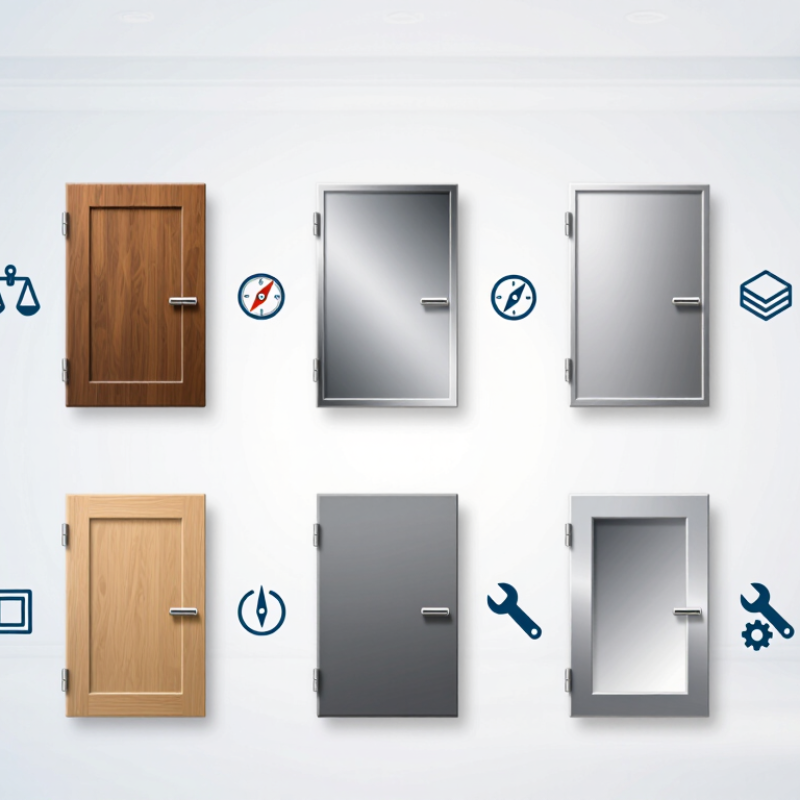
Top 10 Soft Close Doors for Global Buyers

What Soft-Close Doors Are and How Their Mechanisms Work

A soft-close door uses a damper to reduce speed during the final part of closing. The damper may use hydraulic fluid, air resistance, or a spring-assisted design, depending on the hardware. A trigger or catch engages near the end of travel, preventing the panel from striking the frame hard. On a sliding door, the mechanism usually sits in the track or carriage; on a hinged door, it may be built into the closer or hinge.

Feel the difference. The panel should slow smoothly, not stop abruptly or bounce back.

ANSI/BHMA A156.4-2021 provides a durability benchmark for door controls: its grades include testing at 500,000, one million, and two million cycles. These figures apply to tested door controls, not every soft-close slider or cabinet mechanism.

Not always. A cycle rating does not guarantee quiet operation in a real room; alignment, door weight, installation, and dust can all affect performance. I would check the mechanism’s stated load range and test the door repeatedly before specifying it.

A soft landing is useful, but a poorly adjusted damper can feel sluggish.

Main Types of Soft-Close Door Systems on the Global Market

Soft-close doors use different mechanisms depending on the door’s size and use. In cabinets, concealed cup hinges commonly slow the final closing movement; some systems use a damper built into the hinge, while others use a separate add-on damper. Drawer-style sliding doors may use a soft-close runner. For room and entry doors, buyers will more often see surface-mounted hydraulic closers, concealed overhead closers, slide-track closers, floor springs, and pivot or hinge-integrated dampers. Each handles a different combination of weight, traffic, appearance, and installation space. There is no universal best choice.

The distinction matters in specification. A small cabinet damper should not be treated as a substitute for a closer designed for a heavy architectural door. UNEP’s 2024 Global Status Report for Buildings and Construction estimates that buildings and construction account for 32% of global energy demand and 34% of energy-related CO2 emissions. A closer cannot solve building-wide energy performance, but reliable latching can support controlled operation. Check door mass, width, opening angle, frame condition, and expected cycle frequency; then confirm the system’s tested capacity and adjustment range. Real-world alignment is sometimes less perfect than drawings suggest.

Tips: Test a sample with the actual door and frame. Watch the last few centimetres: the door should close steadily, latch fully, and avoid slamming.

Key Factors for Comparing Soft-Close Doors

When comparing soft-close doors, check the whole closing system, not just the hinge. Door weight, panel thickness, hinge geometry, and damper strength must work together. A heavy door may slam if its damper is undersized; a light one may barely move. Ask for tested cycle life, adjustment range, and replacement-part availability. Compare test results under the same conditions, since cycle counts alone can hide differences in load and installation.

Feel the motion. Listen closely. A good unit should slow the door smoothly, without a sharp final click or a long pause before latching. The 2024 Houzz & Home Study reported a $55,000 median spend for major U.S. kitchen remodels, a reminder that cabinetry is a substantial investment. That figure is not a soft-close performance benchmark, though. For durability evidence, request a documented test method, such as relevant ANSI/BHMA cabinet-hardware testing, and confirm the stated grade and cycle requirements. Check corrosion protection, too, especially for humid kitchens. Test twice. In practice, alignment errors can make even quality hardware feel poor; installation tolerance deserves more attention than glossy specifications often receive.

Top 10 Soft-Close Door Comparison Factors

Suggested evaluation weights for comparing soft-close doors and hardware options.

Use these suggested weights as a buyer comparison framework, not as measured market statistics or a ranking of specific products. Check door dimensions, weight limits, installation requirements, and applicable safety standards against each product’s documentation.

Top 10 Soft-Close Doors for Different Applications

Soft-close doors suit different spaces when their closing speed, weight, and hardware match daily use. In homes, use them on bedroom and pantry doors to reduce abrupt slams. Apartments and hotels benefit from quieter corridor doors, while offices and meeting rooms need controlled closure without distracting clicks. For clinics, choose durable, easy-to-clean surfaces; classrooms and libraries benefit from gentle, consistent movement. Kitchen and bathroom doors need moisture-tolerant finishes.

Accessible rooms require careful force adjustment. The U.S. Access Board’s 2010 ADA Standards set a 5-pound maximum opening force for many interior hinged doors, excluding fire doors. A closer should not make an accessible door harder to open.

For exterior entries, select hardware rated for the door’s size, weight, and exposure; heavy traffic may call for stronger-duty components.

WHO’s 2018 Environmental Noise Guidelines recommend keeping average nighttime road-noise exposure below 45 dB Lnight.

That is an environmental benchmark, not a promise that soft-close hardware will achieve a specific indoor noise level. The fit matters. A poorly adjusted closer can still slam—or leave a door partly open.

Tips: Test the door with its actual handle and seals installed. Check closing speed, latch action, and opening effort. Small adjustments make a difference. Recheck after seasonal temperature changes; some doors behave differently than expected.

Global Sourcing, Installation, and Maintenance Considerations

Global buyers should assess soft-close cabinet doors by hinge geometry, tested cycle life, and spare-part availability—not catalog photographs. Global Construction Perspectives and Oxford Economics projected global construction output would reach US$15.5 trillion by 2030 in their 2015 Global Construction 2030 report. Consistent specifications matter across long supply chains. Ask suppliers to document panel thickness, hinge overlay, closing speed, and cycle-test results. Small details matter. A few millimeters of misalignment can make neighboring doors look uneven. Confirm measurement units and sample-door tolerances before approving bulk production.

Installation affects performance. Fit doors level, seat hinge screws securely, and adjust dampers after loading the cabinet. Test several doors, not just one sample. This is often missed. The World Green Building Council’s 2019 Bringing Embodied Carbon Upfront report attributes 39% of global energy-related carbon emissions to buildings: 28% from operations and 11% from materials and construction. Longer service life may reduce replacement demand, but only if components remain repairable and available. Record hinge specifications, adjustment settings, and purchase batches. Clean moving parts gently, then recheck alignment during routine inspections. Soft close isn’t silent forever.

Top 10 Soft Close Doors for Global Buyers — Global Sourcing, Installation, and Maintenance Considerations
Rank Door Type Typical Applications Soft-Close Approach Global Sourcing Checks Installation Considerations Maintenance Considerations
1 Hinged cabinet door Kitchens, bathrooms, utility cabinets, and built-in storage Concealed hinges with an integrated damper, or compatible add-on dampers Confirm overlay or inset design, cup-hole dimensions, door thickness, opening angle, and stated door weight range. Request dimensional drawings and test information. Align the cabinet and door before adjusting hinge depth, height, and side position. Use the specified screw type and pilot-hole sizes for the substrate. Periodically check hinge screws and alignment. Clean with a soft cloth; avoid forcing a door that is obstructed or misaligned.
2 Wide or tall wardrobe hinged door Bedrooms, closets, and full-height storage units Heavy-duty concealed hinges with damping, often using multiple hinges per door Verify panel dimensions, thickness, mass, hinge quantity guidance, mounting-plate pattern, and compatible damper capacity. Support the panel during installation and follow the hardware supplier’s hinge-spacing guidance. Check that the floor and cabinet are level. Inspect fasteners and hinge alignment periodically, especially on tall or frequently used doors. Replace damaged dampers rather than lubricating sealed units.
3 Bypass sliding wardrobe door Closets and wardrobes where doors slide past one another Track-mounted soft-close units that capture and decelerate the moving panel Check track profile, panel thickness and weight, opening direction, stopper position, and whether the system is compatible with top-hung or bottom-rolling doors. Install tracks level and parallel. Set the trigger position and verify that the door engages and releases the damper reliably. Keep tracks free of dust and debris. Inspect rollers, stops, and damper engagement; use only cleaning or lubrication methods permitted by the supplier.
4 Pocket sliding door Interior partitions, bathrooms, and compact rooms Track-integrated soft-close hardware concealed inside the pocket frame Confirm the track system, panel dimensions and weight, pocket-frame compatibility, handing, and availability of replacement parts. Install the frame plumb and the track level before closing the wall. Provide access to service components where the system design requires it. Clean accessible track areas and inspect the running gear. Plan repairs carefully because concealed components may require removing trim or the door panel.
5 Cabinet pocket door Appliance garages, media cabinets, and compact storage units Pivot-and-slide or track hardware with a soft-close damper, depending on the mechanism Request the complete movement path, minimum cabinet dimensions, panel-size limits, and compatibility details for left- or right-hand installation. Check cabinet squareness and clearances so the panel can retract without contacting shelves, appliances, or adjacent doors. Remove dust from the tracks and pivots. Check that the panel remains aligned and that the damper engages without excessive force.
6 Top-hung interior sliding door Room dividers and interior openings with a visible or concealed upper track Soft-close end stops fitted to a compatible sliding track Confirm panel weight and thickness limits, track length, wall or ceiling mounting requirements, and the specified fixing method for the project substrate. Fix the track into suitable structural support. Verify clearances, plumb alignment, and secure anti-jump or retaining components where supplied. Inspect track fixings, rollers, and end stops. Keep the running surface clean and do not exceed the published panel-weight limit.
7 Barn-style sliding door Interior openings where the track and rollers are intentionally visible Track-compatible soft-close units fitted near the end of travel Check whether the soft-close unit is designed for the selected track profile, door mass, travel direction, and available wall clearance. Mount the track into structural backing or an approved support system. Confirm that the door clears skirting, handles, and nearby switches. Check track and fasteners for movement, and keep the rollers and track free of debris. Recheck alignment if the door begins to bind.
8 Framed glass cabinet door Display cabinets, kitchen uppers, and bathroom storage Soft-close hinges or damped pivots designed for the specific framed-door system Confirm frame profile, glass thickness, panel weight, hinge interface, and required safety-glass specification for the intended location. Follow the system’s glass and frame instructions. Avoid drilling or modifying glass unless the process is specified and performed by a qualified fabricator. Use non-abrasive cleaners suitable for the frame and glass. Check hinge fixings and seals, and replace damaged glass or hardware promptly.
9 Frameless glass shower door Residential shower enclosures Purpose-designed damped hinges or a compatible sliding-door soft-close assembly Verify glass thickness and weight limits, mounting configuration, corrosion-resistance information, and suitability for wet areas. Confirm local glazing and safety requirements. Use the specified safety glass and compatible fittings. Installation should account for wall structure, enclosure alignment, and required clearances. Rinse and dry hardware as appropriate for the finish. Check fixings and seals; follow the supplier’s guidance for cleaning and corrosion prevention.
10 Interior swing door with a controlled closer Office, hospitality, and other interior passages requiring controlled closing Door closer with adjustable closing or latching action; selection depends on door and project requirements Check door width and mass, mounting position, opening requirements, environmental conditions, and applicable accessibility or building-code requirements. Install using the closer’s approved template and fixings. Adjust closing speed and latching action in accordance with the product instructions and local requirements. Inspect arm fixings and operation periodically. Do not use a closer as a substitute for required certified fire-door hardware or code-compliant access provisions.

Selection note: This is an application-based comparison, not a ranking of specific products. Before purchase, confirm panel dimensions and weight limits, local safety and building requirements, installation instructions, test data, spare-part availability, and warranty terms with the supplier.

FAQS

What does a soft-close door do?

A damper slows the door during its final movement and helps prevent a hard impact. Feel the difference.

How does the mechanism work?

A trigger engages near the end of travel. The damper then slows the panel using fluid, air resistance, or spring assistance.

Where is the soft-close mechanism installed?

Sliding-door hardware is often built into the track or carriage. Hinged doors may use a closer, hinge-integrated damper, or separate unit.

Are all soft-close systems suitable for every door?

No. Cabinet dampers, sliding-door runners, and architectural door closers handle different weights and uses. Check the door’s size and expected traffic.

What should I check before choosing a system?

Compare door weight, width, opening angle, frame condition, and cycle frequency. Confirm the hardware’s tested capacity and adjustment range.

What does a cycle rating tell me?

It shows how many closing cycles a tested control completed under stated conditions. Some tests use 500,000, one million, or two million cycles. Not always.

How can I test the closing action?

Try the hardware with the actual door and frame. Watch the final few centimetres: the door should slow steadily and latch without bouncing.

Why might a good mechanism still feel poor?

Misalignment, dust, door weight, or installation errors can affect performance. I might blame the hardware too quickly; the frame could be the real problem.

What other details matter for cabinet hardware?

Check adjustment options, replacement-part availability, and corrosion protection in humid kitchens. Listen closely. A sharp click or long pause may need attention.

Conclusion

Soft Close Doors are designed to reduce impact, noise, and wear by slowing a door near the end of its travel. Depending on the application, the mechanism may use hydraulic damping, spring assistance, or concealed components integrated into hinges, tracks, or frames. Common systems include solutions for cabinets, interior doors, sliding panels, and heavier commercial or residential doors. Each type offers different installation needs, closing performance, and levels of adjustability.

When comparing options, buyers should consider door size and weight, material compatibility, operating frequency, available space, adjustment range, durability, and maintenance requirements. The right choice depends on the intended use, from compact cabinetry to frequently used entryways. Global sourcing also calls for clear product specifications, suitable hardware, and practical installation guidance. Regular checks, cleaning, and timely adjustment can help maintain smooth, quiet operation over time.


Sophia

Sophia

Sophia is a dedicated marketing professional with an exceptional depth of knowledge about her company's products and services. With a keen understanding of market trends and customer needs, she crafts insightful blog posts that not only inform but also engage readers, enriching the company’s online......