Drawer Accessories may look like small components, yet they strongly influence furniture quality, function, and buyer satisfaction. For global buyers, the right slides, handles, organizers, and soft-close systems can improve daily use. A drawer that opens smoothly feels reliable. A misaligned drawer creates complaints quickly.
Experienced procurement teams examine more than appearance. They review load capacity, cycle testing, corrosion resistance, dimensions, installation methods, and packaging protection. These details matter during international transportation, where vibration, humidity, and rough handling can expose weak designs. Reliable suppliers should provide clear specifications, inspection records, material information, and consistent samples. Buyers should also confirm compatibility with local furniture standards and manufacturing processes.
Small details matter. A two-millimeter error can affect an entire cabinet line. In my experience, buyers sometimes focus heavily on unit price and overlook installation labor or replacement costs. That approach may save money initially, but it can weaken the final result. Still, no sourcing decision is perfect. Product testing may not fully represent every household, climate, or usage habit. Buyers should leave room for practical feedback and revise specifications when evidence changes.
For this reason, Drawer Accessories deserve careful evaluation rather than quick selection. They connect engineering, user comfort, production efficiency, and long-term reliability. When global buyers assess these products with documented evidence and realistic testing, they can build stronger supplier relationships and reduce avoidable quality risks. The smallest fitting may shape the entire customer experience.
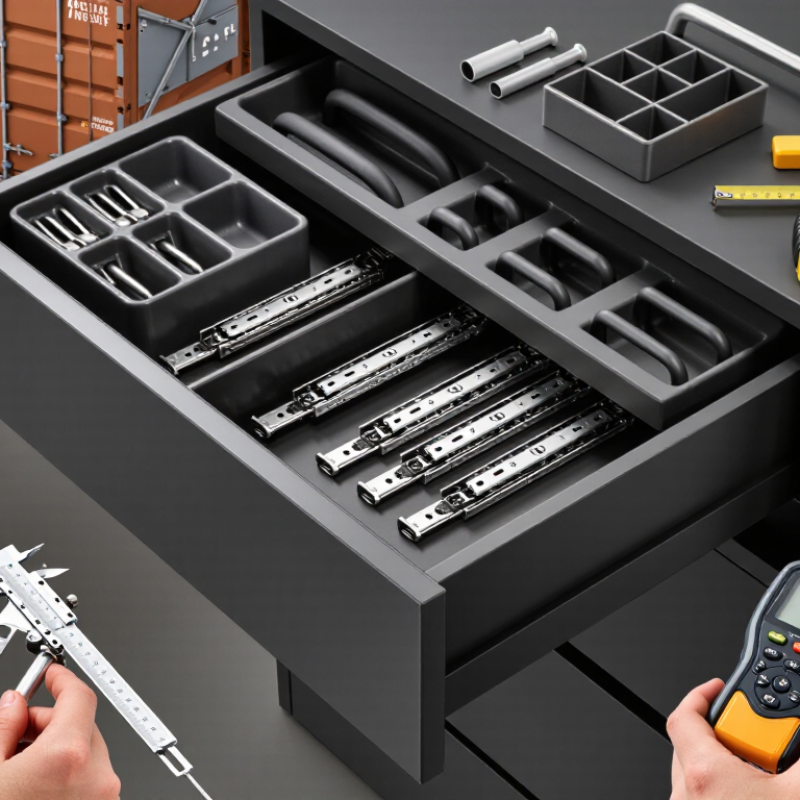
Why Are Drawer Accessories Essential for Global Buyers?
Drawer Accessories Defined: Storage, Motion, Safety, and Ergonomics
Drawer accessories are not decorative extras. They shape how storage works each day. For global buyers, this category includes slides, hinges, organizers, locks, buffers, and handles. Each part affects access, capacity, and user confidence. A drawer should open smoothly when loaded with utensils, tools, or files. Small misalignment can create noise, friction, and early wear.
Motion needs measurable control. Quality slides should match the drawer’s load rating, width, and expected cycle frequency. Soft-closing components reduce impact and help protect stored items. Safety details matter too, especially around pinch points and exposed edges. Ergonomics is equally practical. A comfortable handle, clear internal layout, and suitable opening force reduce strain during repeated use. Too much resistance is frustrating. Too little control feels unsafe.
Real projects are rarely perfect. I once underestimated how much humidity could affect a metal component during transport and installation. That mistake made material checks more important. Buyers should review dimensions, surface treatment, installation tolerance, and test records before placing large orders. A specification sheet helps, but it cannot replace a physical sample. Test the drawer with realistic weight, repeated opening, and uneven loading. Also check whether local installers can understand the instructions without guessing. Small oversights become expensive when thousands of units reach different markets.
| Accessory Type | Primary Function | Storage and Organization | Motion and Safety | Ergonomic Value | Key Buyer Checks |
|---|---|---|---|---|---|
| Drawer dividers and adjustable organizers | Separate items into compartments and help keep contents in place. | Useful for cutlery, utensils, tools, stationery, and small household items. Adjustable designs can accommodate different item sizes. | Dividers can reduce contents shifting when a drawer opens or closes; they do not replace a drawer’s load-rated hardware. | Frequently used items are easier to locate and retrieve without searching through a mixed drawer. | Check internal drawer width, depth, and height; confirm whether the organizer is adjustable, removable, and easy to clean. |
| Cutlery trays and fitted inserts | Provide dedicated spaces for utensils and small kitchen tools. | Compartment layouts help separate items by type and make better use of drawer space. | Non-slip feet or a close-fitting design can help limit movement inside the drawer. | Clear compartments make everyday kitchen items easier to identify and access. | Measure the usable interior, not only the drawer front. Check material, cleaning requirements, and compatibility with the drawer shape. |
| Drawer slides and runners | Support the drawer and guide its opening and closing movement. | Full-extension models can provide access to more of the drawer interior than partial-extension designs, depending on the product. | Load capacity, mounting method, and travel length vary by model. Use the specified rating and installation instructions. | Smooth, predictable movement can reduce the effort needed to open and close a drawer. | Confirm slide type, extension, load rating, drawer dimensions, mounting clearance, and compatibility with the cabinet and drawer construction. |
| Soft-close mechanisms | Slow the drawer during the final part of closing. | Help keep drawer contents settled by reducing abrupt closing movement. | Can reduce slamming and associated noise. Performance depends on correct installation and compatibility with the slide system. | Provides a controlled closing action with less need to guide the drawer firmly into place. | Check whether the mechanism is integrated or separately fitted, and verify compatibility, adjustment requirements, and rated drawer load. |
| Push-to-open mechanisms | Release a drawer when its front is pressed, for handle-free designs. | Keep the drawer front visually clear and provide access without a conventional pull. | Require correct alignment and adjustment for consistent release and closing. The mechanism is not a child-safety lock. | Can be useful where users prefer a handle-free front or need to open a drawer with a light touch. | Check required front gaps, compatible slides, adjustment range, and whether the design requires a specific cabinet or drawer configuration. |
| Drawer locks and safety latches | Restrict access to selected drawers or help prevent unintended opening. | Useful for securing documents, tools, cleaning supplies, or other contents that should not be freely accessible. | Locking and latching performance depends on the product and installation. These devices are not substitutes for supervising children or securing hazardous contents appropriately. | Allow users to control access without changing the drawer’s storage layout. | Check installation location, drawer-front material and thickness, key or release method, and whether the latch suits the intended use. |
| Drawer handles and pulls | Provide a grip for opening and closing a drawer. | Do not add internal storage, but can make drawers easier to identify and use. | Secure fastening and suitable edge design help reduce the chance of a loose fitting or uncomfortable contact. | Grip shape, projection, and placement affect comfort and ease of use for different users. | Confirm hole spacing, fixing method, projection, finish, and clearance from adjacent doors, drawers, or walkways. |
| Pull-out waste or recycling bins | Store waste or recycling containers within a drawer or pull-out unit. | Keep containers organized and out of sight; separate bins can support sorting where local waste systems allow. | Check the load limits of the supporting hardware and ensure the unit remains stable during use. | Pull-out access can reduce bending and make containers easier to reach than a bin placed at the back of a cabinet. | Measure available width, depth, and height; check container capacity, cleaning access, ventilation needs, and slide compatibility. |
| Felt or non-slip drawer liners | Cover the drawer base to protect surfaces and help limit item movement. | Can be cut to fit and used beneath organizers, utensils, or stored objects. | A liner may reduce rattling and sliding, but it does not secure heavy or hazardous objects. | Helps keep contents arranged and can make drawer interiors more comfortable to use and maintain. | Check material, thickness, grip, cleaning method, and suitability for the drawer’s intended contents. |
They include slides, hinges, organizers, locks, buffers, and handles. Each part affects storage, movement, safety, and daily comfort.
A drawer may feel smooth when empty but struggle with utensils, tools, or files. Test full weight, repeated openings, and uneven loading.
Match the slide rating with drawer width, stored weight, and expected opening frequency. A small mismatch can cause noise, friction, and early wear.
Check pinch points, exposed edges, opening force, and impact control. Soft-closing parts reduce sudden movement and help protect stored items.
Compare total cost, MOQ, lead time, and expected service life. Include fasteners, packaging, compatible parts, shipping, and replacement support.
Lead time should cover sample approval, production, and shipping. Factory days alone can create unrealistic schedules.
Request test conditions, including load, opening cycles, and installation method. Compare results only when the testing conditions are similar.
No. Request a physical sample and review dimensions, surface treatment, tolerances, and test records. Paper can look convincing.
Check whether local installers understand the instructions without guessing. Clear steps, suitable tolerances, and practical samples reduce installation errors.
Humidity may affect metal components during transport and installation. I once underestimated this risk. Material checks should be stricter.
Drawer Accessories are essential components that improve the storage capacity, movement, safety, and ergonomic performance of modern furniture. This category includes runners, slides, hinges, locking features, organizers, and related hardware designed to support smooth operation and efficient space management. For global buyers, understanding load capacity is critical, with common ratings ranging from 25 to 70 kg when evaluated through EN 15338 testing. Soft-close performance is also an important purchasing factor, especially when products are expected to withstand approximately 80,000 operating cycles while maintaining consistent movement and noise control.
A reliable sourcing decision should combine technical performance with commercial requirements. Buyers can compare products according to EN 15338, ISO 7170, and ANSI/BHMA standards, while also reviewing cost, minimum order quantity, lead time, warranty support, and expected service life. By using a clear evaluation matrix, purchasers can select Drawer Accessories that balance durability, compliance, installation convenience, and long-term value for different markets and furniture applications.

 Xianghui