In contemporary architectural design, the integration of seamless interfaces has shifted from an avant-garde aesthetic preference to an industry baseline requirement. Handle-free furniture profiles, characterized by clean lines and uninhibited structural envelopes, define modern kitchens, high-density residential developments, and commercial office systems. At the center of this functional evolution is the cupboard door push-to-open latch (frequently designated as a mechanical magnetic bouncer or touch-latch switch).
As modern construction demanding larger, floor-to-ceiling cabinet panels surges, hardware suppliers face a dual challenge: maintaining mechanical reliability while overcoming physical material warping. Sourcing from a highly integrated supplier like Guangdong Xianghui (Chenglang Fittings) enables designers and builders to implement systems where handle-free doors open with a micro-touch trigger. This whitepaper analyzes the mechanical physics, global market status, materials engineering, and structural synchronization necessary to implement these systems successfully.
“Architectural precision is achieved when components operate invisibly. The push-to-open system is not simply an aesthetic choice—it is a spatial configuration that demands strict adherence to engineering tolerances.”
The global demand for high-performance touch latches is driven by rapid urban densification and the expansion of custom millwork. Modern space optimization requires cabinets that maximize internal volume while presenting a minimal external footprint. Geographically, the market is bifurcated into high-end specification zones (principally Western Europe and metropolitan areas of North America) and manufacturing hubs in the Asia-Pacific region, which produce components under stringent OEM/ODM conditions.
Leading Chinese manufacturing plants have evolved from basic stamping factories into advanced technological centers. The integration of robotic assembly and automated quality-control modules ensures that critical specifications—such as magnetic attraction force, trigger stroke length, and spring elasticity indexes—remain uniform across bulk manufacturing runs. This guarantees consistent performance, minimizing the field-failure rates that commonly plague low-spec alternatives.
Guangdong Xianghui is a high-potential enterprise focused on long-term development, featuring a comprehensive service ecosystem and sustainable competitive advantages across technology, brand, and sector expertise. As a leading manufacturer and supplier of furniture hardware, door straighteners, and cabinet support systems, we deliver solutions engineered to meet the strict demands of residential, commercial, and industrial projects.
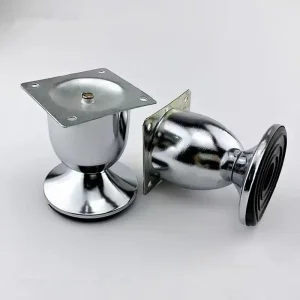
Our portfolio goes beyond touch-latches to include high-durability drawer slides, functional hinges, load-bearing legs, and specialized anti-deformation door straighteners. Our products are tested to ensure structural longevity and aesthetic compatibility, providing B2B buyers with reliable, premium hardware systems.
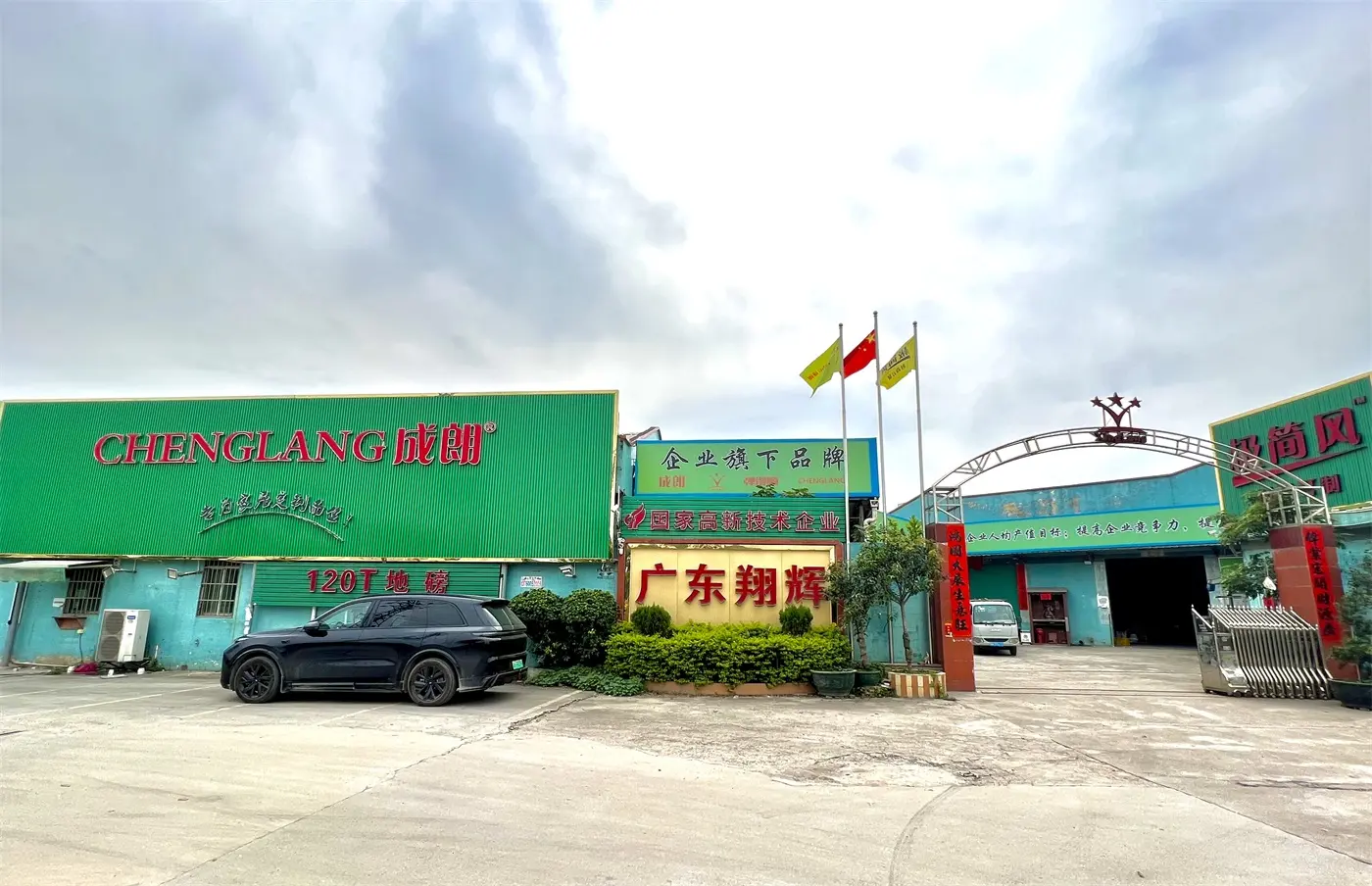
Guangdong Xianghui utilizes automated production machinery and advanced injection molding techniques to ensure exact alignment and dimensional stability in all hardware components.
Our brand credibility is built on international certifications and customer validation. We prioritize technical support, engineering consulting, and responsive service to satisfy global commercial requirements.
We work closely with global industry leaders, maintaining long-term partnerships with brands such as DTC, Hettich, Norma, and Quanyou to support international supply chains.
By using flexible prototyping and agile cost management, we quickly turn design concepts into field-tested products, helping our clients stay competitive in changing markets.
The primary failure mode in handle-free cabinetry is not the failure of the spring latch itself, but structural alignment changes in the cabinet door. Tall wardrobe and cupboard doors, especially those exceeding 1.6 meters in height, are subject to internal stress, moisture shifts, and environmental variations. Over time, these factors cause wood panels to bow or warp.
Even a small 2mm warp in a door panel can throw off the alignment of a push-to-open latch. When the trigger plate and the internal spring piston are misaligned, the touch latch may jam or fail to catch. This is why commercial-grade handle-free systems require the installation of adjustable door panel straighteners.
| Hardware System Component | Primary Material & Specification | Mechanical Function | Anti-Deformation Role |
|---|---|---|---|
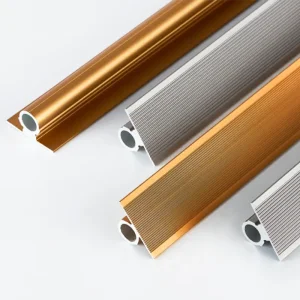
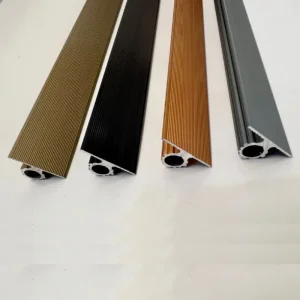
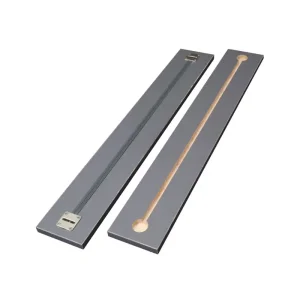
| Type A Door Panel Straightener | Al6063-T5 Aluminum Profile + Carbon Steel Core | Creates linear tension across the back of the panel | Prevents and corrects bending in doors up to 2800mm |
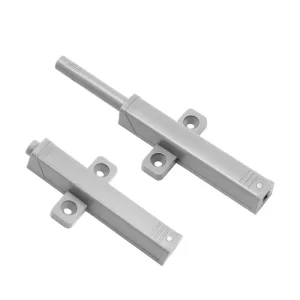
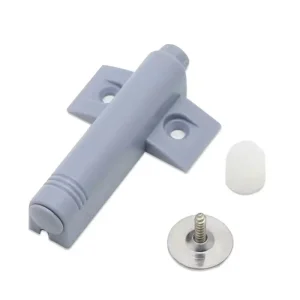
| Magnetic Cabinet Door Bouncer | Engineering POM Core + Neodymium Latch Magnet | Provides spring-driven ejection and magnetic holding force | Maintains a constant 2mm to 4mm trigger-release gap |
| Large Winged Bouncer Switch | High-Impact Reinforced ABS Shell | Heavy-duty touch-activation for commercial doors | Dampens closure shock and aligns heavy panels |
| Italian Style Straightener | High-Tensile Carbon Steel + Tension Screw System | Flush-groove installation for clean interior styling | Allows precise alignment adjustments via key tensioning |
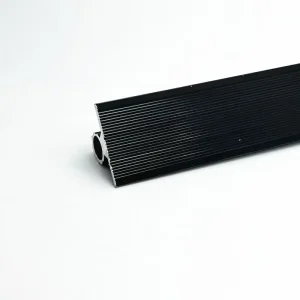
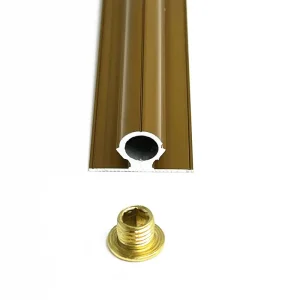
The Wholesale Chenglangweifa Type A Door Panel Straightener works through a tension rod mechanism housed inside an aluminum extrusion. The rod is anchored at both ends of the cabinet door panel. When structural shifting occurs, technicians can adjust the tensioning screw in the center of the straightener.
Applying counter-tension corrects the curvature of the panel, pulling it back to flat. This alignment ensures the push-to-open magnetic bouncer remains centered with the metal catch plate, keeping the touch-latch mechanism operating smoothly over years of use.
To meet the strict performance standards of global brands, Guangdong Xianghui uses a rigorous manufacturing process focused on longevity and material reliability:
We use high-grade Polyoxymethylene (POM) for our internal gears and pistons, providing excellent wear resistance and structural stability under load.
Our compression springs are wound from high-carbon wire and heat-treated to resist fatigue, ensuring consistent rebound force over 100,000 uses.
We use rare-earth neodymium magnets in our bouncer tips, providing reliable holding force that prevents cabinet doors from popping open due to internal air pressure.
Push-to-open and structural straightener systems are used across a range of settings:

 Xianghui