
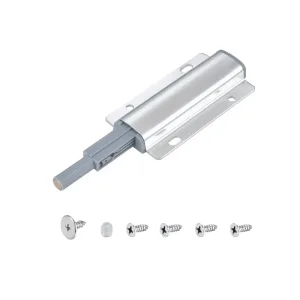
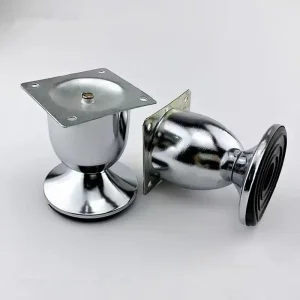
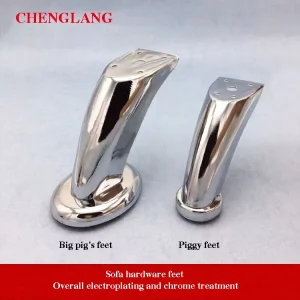
China Push To Open Door Hardware Manufacturers & Suppliers

Precision-Engineered Cabinet Rebounders, Magnetic Touch Latches, and Adjustable Structural Fittings for Modern Architecture & Premium OEM/ODM Production.

Premium Push-To-Open & Supporting Hardware Solutions

Engineered for architectural minimalism, durability, and seamless integration.

1. Global Procurement Dynamics: The Shift to Minimalist Spatial Architecture

In the global interior architecture and luxury cabinetry markets, the demand for handleless cabinetry is no longer a niche aesthetic trend—it has become a foundational structural requirement. From high-density multi-family housing developments in North America to luxury custom millwork in Western Europe, the integration of push-to-open door hardware dictates spatial efficiency and visual cleanliness. This transition is heavily driven by B2B procurement stakeholders who seek architectural hardware that balances visual minimalism with robust mechanical reliability.

Procurement teams and engineering heads in the furniture and real estate sectors look for key metrics when selecting a manufacturing partner in China. The longevity of spring tension, magnetic retention forces (expressed in Newtons), and resistance to corrosion are critical variables. Heavy-duty applications, such as floor-to-ceiling wardrobe doors, demand sophisticated rebound mechanisms that prevent panel warppage while providing uniform tactile feedback. To prevent warping over extended use cycles, products like the Chenglangweifa Type A Door Panel Straightener are paired alongside mechanical rebounders to guarantee structural longevity.

Tactile Consistency

Precision engineering ensures that the opening force remains constant (approx. 12-18 Newtons) even after 80,000 duty cycles.

Magnetic Precision

Custom rare-earth Neodymium magnets deliver consistent holding power, eliminating door bounce-back issues in tall cabinetry.

Material Integrity

Housings constructed from high-grade anodized aluminum alloy and engineering-grade POM plastics stand up to harsh environments.
2. Mechanical & Magnetic Architecture: Achieving Zero-Handle Operations

The implementation of push-to-open mechanisms requires a deep understanding of physical dynamics and door kinematics. At its core, the technology relies on a stored-energy compression spring system coupled with a capture latch or a high-flux magnet. When external pressure is applied, the internal latch releases the spring, converting potential mechanical energy into kinetic energy that pushes the door past its magnetic threshold.

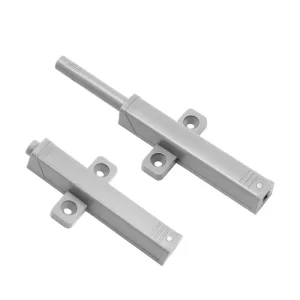
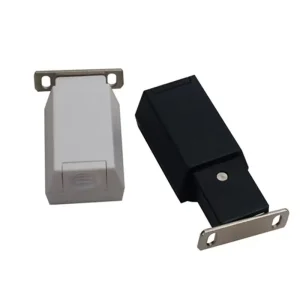
Selecting the ideal model depends heavily on door weight, height, and hinge style. Standard cabinet doors utilize surface-mounted aluminum alloy rebound devices, whereas large-scale interior passage doors require heavy-duty integrated magnetic touch systems. Below is a comparative engineering overview showing how specific mechanical designs map to various functional applications:

Hardware Class Housing Material Rebound Distance Recommended Application Max Door Weight Limit
Heavy-Duty Magnetic Rebounder High-impact POM + Magnet 40mm – 55mm Floor-to-ceiling Wardrobes, Hidden Doors Up to 35 kg
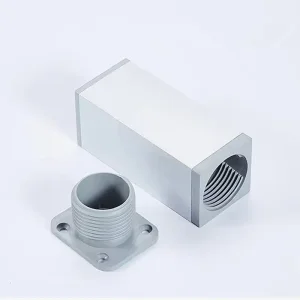
Surface-Mounted Alloy Device Anodized Aluminum 6063 30mm – 45mm Modern Kitchen Cabinets, Office Credenzas Up to 20 kg
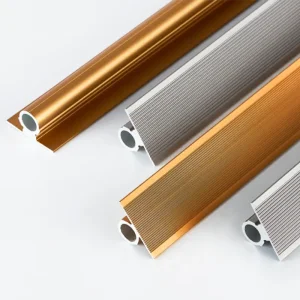
Linear Panel Straighteners Reinforced Aluminum Channel N/A (Adjustable Tension) Preventing Warp in MDF & Solid Wood Panels Fits Panels 1.6m – 2.8m Tall
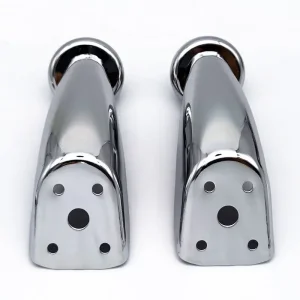
Heavy Pigs-Feet Supports Electroplated Chrome Iron N/A (Support Leg) High-load Cabinet Base Stabilization Supports up to 150 kg per unit
80k+
Tested Rebound Cycles
100%
QC Precision Inspection
50+
Global Direct Partners
15+
Years Industrial Authority

3. Corporate Profile: Deep Spatial Hardware Competence (CHENGLANG)

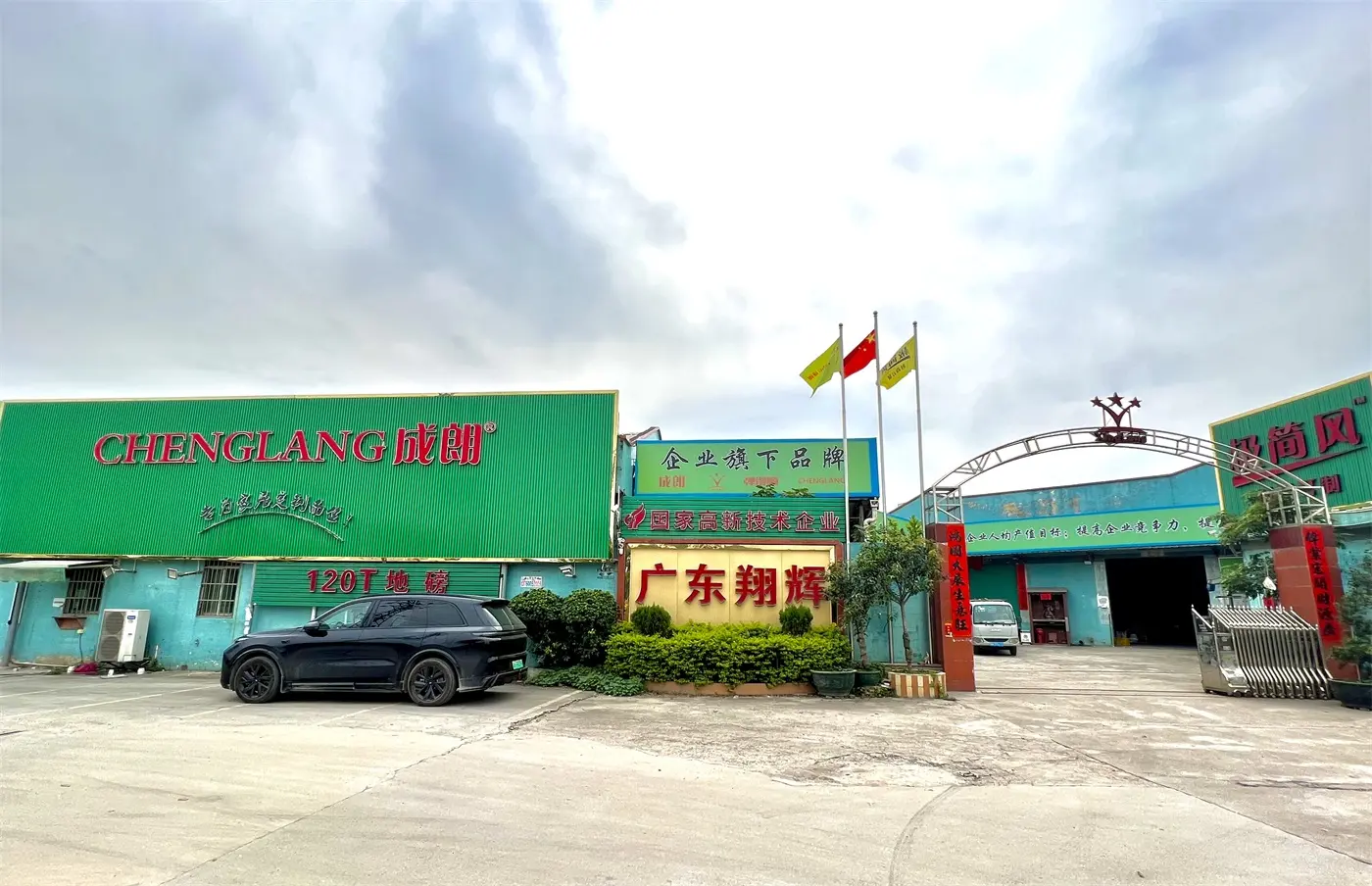
Guangdong Xianghui (widely recognized under the brand name CHENGLANG) is an industrial leader with strong potential for long-term development. Boasting a wide service range, the company possesses sustainable competitive advantages in technology, brand equity, and deep supply-chain integration. As a leading manufacturer of premium furniture hardware, structural backboards, panel straighteners, and commercial closet fittings, we pride ourselves on providing high-quality solutions designed to meet the rigorous demands of custom fabricators and international procurement networks.

Our comprehensive range of furniture hardware includes a diverse selection of accessories, hinges, slides, and structural supports engineered to elevate the utility and styling of premium furniture projects. From soft-close slides to advanced magnetic rebounders, every component complies with strict quality baselines. By investing heavily in R&D and maintaining deep raw-material partnerships, Guangdong Xianghui ensures that its products consistently deliver reliability and performance.

CHENGLANG Manufacturing Center in Guangdong

Why Global Brands Standardize with CHENGLANG

Operational resilience and product differentiation across four primary pillars.

  • Technological Advantage
    Guangdong Xianghui utilizes advanced automated production equipment and innovative processing technology to manufacture high-yield hardware components with minimal dimensional tolerances.
  • Brand Advantage
    Our market recognition is built on multiple compliance certifications and the direct endorsement of clients globally. We prioritize client-centric engineering, providing reliable products and high-touch support.
  • Industry Advantage
    Guangdong Xianghui has established long-term strategic partnerships with leading global brands such as DTC, Hettich, Norma, and Quanyou, solidifying our reputation in the sector.
  • Innovation Advantage
    We focus on applying new technologies to create unique products and improve efficiency, using responsive R&D cycles and lean operational management to control production costs.

5. Technology Roadmap: The Next Generation of Mechanical Fittings

The growth of modern interior design continues to drive hardware innovations. Looking ahead, our product engineering teams are focusing on three primary pillars of technical advancement: material durability, magnetic field configuration, and hybrid mechanical-pneumatic systems. By moving beyond traditional single-spring setups, CHENGLANG is pioneering dual-stage magnetic devices that provide quieter dampening during closure alongside responsive rebound performance when pushed.

Furthermore, our engineering roadmap aims to tackle the challenge of high-weight panel sagging. When using large MDF or composite panels, structural deformation is a common point of failure for touch-release systems. Integrating precision straighteners with high-load rebounders represents a major advancement, helping to ensure that cabinet doors remain perfectly square over their operational life.

Phase 1: Advanced Dampening Integration

Integrating micro-pneumatic cylinders with mechanical spring housings to achieve quiet, controlled recoil speeds.

Phase 2: High-Durability Materials

Deploying self-lubricating polyoxymethylene (POM) internal sliders to decrease friction losses and extend cycle life beyond 100,000 cycles.

Phase 3: Adjustable-Force Rebounders

Introducing adjustable spring tension components that let installers fine-tune the pushing force based on door weight and size.

6. Industrial Landscape: Global Standards and Regional Preferences

Global B2B hardware distribution networks must cater to distinct regional preferences and technical standards. In European markets, high demand exists for concealed hardware that aligns with European norm EN 15570 Level 3 durability requirements. This standard demands that cabinet doors remain operational after 80,000 opening and closing cycles. In contrast, North American commercial projects often specify hardware that meets ANSI/BHMA Grade 1 requirements, emphasizing structural safety and heavy-weight capacity.

For emerging markets across Asia-Pacific and South America, cost-efficiency and quick-assembly mechanisms are primary drivers. Industrial housing projects rely heavily on surface-mounted solutions, such as aluminum alloy rebound casings, because they install quickly and require minimal carpentry milling. To serve these varied needs, Guangdong Xianghui offers standard OEM catalog items alongside custom engineering and design solutions.

7. Compliance Frameworks and Global Logistics Support

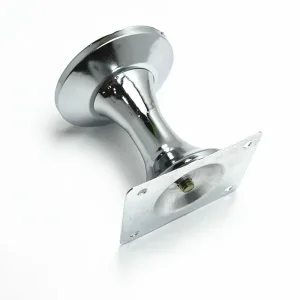
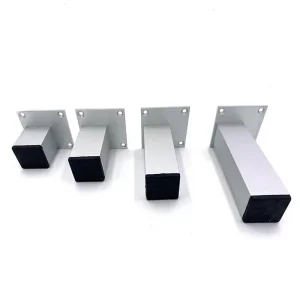
International sourcing requires rigorous quality control and clear traceability pathways. At CHENGLANG, our production facilities are ISO 9001:2015 certified, and our metal alloys undergo RoHS compliance checks to ensure they meet environmental safety standards. Additionally, we subject our electroplated finishes (such as our chrome sofa legs and metallic housings) to neutral salt spray tests (NSS) for up to 48 hours to confirm rust resistance in humid environments.

To facilitate smooth customs clearance, we provide complete compliance documentation, including certificates of origin, detailed material composition reports, and structural load certificates. This proactive support helps prevent shipment delays at major global ports, ensuring that your inventory arrives on schedule.

Industrial FAQ: Technical Specifications & Procurement

Answers to engineering and logistical questions about push-to-open systems.

What features determine a heavy-duty rebounder's load capacity?

The load capacity depends on spring wire thickness, the number of coils in the spring assembly, and the internal cylinder diameter. Heavy-duty applications require a wire gauge of 1.2mm or larger to ensure adequate kinetic energy release for heavy panels.

How do door panel straighteners work alongside push-to-open door hardware?

When cabinet doors exceed 1.6 meters in height, ambient moisture fluctuations can warp the wood or MDF panels. This warping can throw off the alignment between the door and the magnetic latch. Straighteners correct this by using adjustable metal rods to pull the panel back into alignment, ensuring smooth operation for the push-to-open latch.

What material options are available for custom surface-mounted housings?

We offer two primary options: engineering-grade POM/ABS polymer casings for cost-efficiency and corrosion resistance, and extruded 6063-T5 aluminum alloy sleeves with anodized finishes for luxury and commercial applications.

Are your push-to-open fittings compatible with standard soft-close hinges?

Standard soft-close hinges tend to pull the door inward, counteracting the outward spring force of a mechanical rebounder. For optimal operation, we recommend pairing push-to-open hardware with non-sprung hinges or hinges designed specifically for touch-to-open cabinets.