 Xianghui
Comprehensive Industry Whitepaper: The Evolution of Next-Generation Furn Style Hardware & Smart Architectural Solutions
In modern architectural spatial design and custom furniture manufacturing, hardware is no longer merely a functional connector; it represents the structural backbone and ergonomic driver of overall product durability. As global residential and commercial interior trends shift toward handle-free minimalist aesthetics, ultra-tall wardrobe configurations (exceeding 2.7 meters), and high-load metallic leg frameworks, hardware engineering has entered an era defined by material science, micro-mechanics, and spatial precision.
As a leading Wholesale Furn Style Manufacturer & Supplier, Guangdong Xianghui (Chenglang Fittings) operates at the forefront of this industrial transition. By integrating advanced Polyoxymethylene (POM) engineering polymers, precision cold-rolled carbon steel, anodized aluminum alloys, and multi-layer electroplating processes, our manufacturing ecosystem delivers solutions that resolve persistent industry challenges such as panel warping, latch degradation, surface oxidation, and dynamic stress failure.
Key Information Gain Benchmark: Standard furniture hardware experiences functional decay after 30,000 actuation cycles. Modern industrial hardware utilizing carbon steel tension rods and POM magnetic latching systems extends physical service life past 150,000 to 200,000 cycles while retaining strict tensile stability under variable humidity environments.
1. Macro Structural Trends in Global Furniture Hardware Manufacturing
The global furniture fittings market is experiencing rapid diversification driven by three primary macroscopic forces:
- Spatial Minimalist Integration: Architectural trends prioritize handle-free cabinetry, requiring hidden magnetic rebounders and push-to-open mechanical systems capable of smooth ejection even under heavy panel pressure.
- Panel Height Expansion & Anti-Warping Dynamics: Modern wardrobes increasingly extend from floor to ceiling. However, engineered wood (MDF, particle board, plywood) exhibits natural warping due to ambient thermal expansion and moisture absorption. Integrated Italian-style carbon steel door straighteners provide adjustable counter-tension to preserve planar flatness over decades.
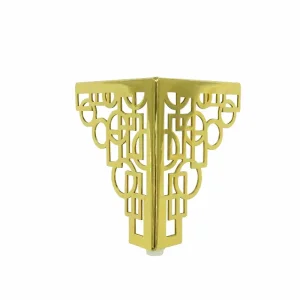
- Heavy-Duty Architectural Supports: Sofa bases, luxury coffee tables, and media consoles require metal legs capable of sustaining massive static and dynamic loads while providing aesthetic continuity through advanced finishes like brushed gold, electroplated chrome, and matte black PVD coatings.
2. Material Science & Engineering Breakthroughs
Achieving commercial-grade durability requires strict material selection across four essential hardware categories:
| Hardware Category | Core Material Composition | Engineering Advantage | Primary Application Scenario |
|---|---|---|---|
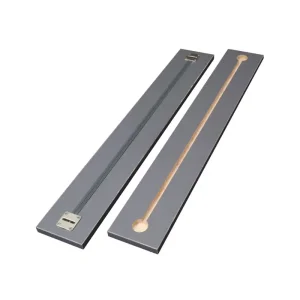
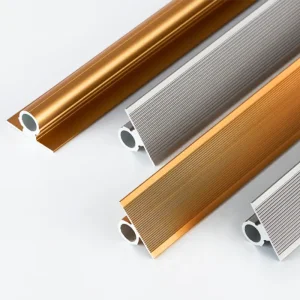
| Door Straighteners | Carbon Steel Rods / Extruded Aluminum Alloy | High tensile yield strength, adjustable internal turnbuckle mechanism | Floor-to-ceiling wardrobe doors (> 2.4m tall) to prevent warping |
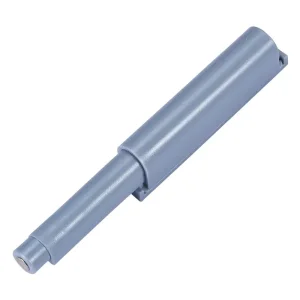
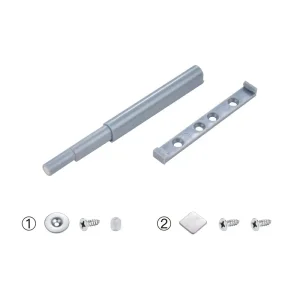
| Magnetic Rebounders | POM (Polyoxymethylene) + Neodymium Magnet | Ultra-low friction coefficient, high impact resistance, silent ejection | Handle-free kitchen cabinets, push-to-open drawer systems |
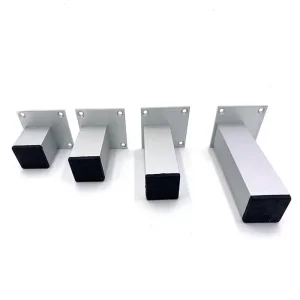
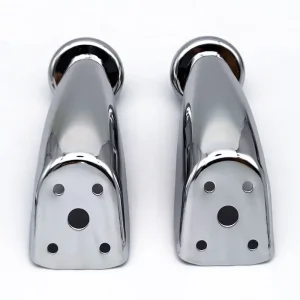
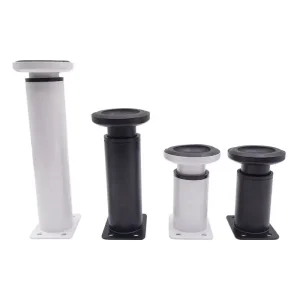
| Architectural Legs | Electroplated Cast Iron / Anodized Aluminum | Load capacity up to 500kg/set, height-adjustable anti-slip base | Heavy sofas, TV units, luxury bathroom vanities |
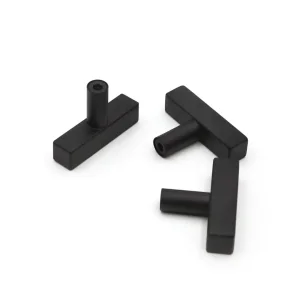
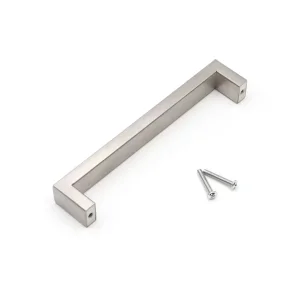
| Cabinet Handles | Stainless Steel (SUS 201/304) / Hollow Square Tube | Corrosion resistance, seamless laser welding, light weight with high rigidity | Modern residential kitchens, commercial office furniture |
3. Structural Mechanism Analysis: Anti-Warping Door Panel Straighteners
One of the most critical structural innovations in modern cabinetry is the concealed door panel straightener (such as the Chenglangweifa Type A CL-A0011). Door panels constructed from composite wood naturally deform due to internal stresses and environmental fluctuations. A straightener works by embedding a high-tensile carbon steel rod within a milled groove along the vertical length of the door panel.
By adjusting the top and bottom hex tension bolts, installers can apply active push or pull force along the panel’s neutral axis. This pre-stressed mechanical force directly counteracts cabinet door bowing, ensuring that handle-free magnetic touch latches align perfectly with zero margin for latch misalignment.
4. Polymer Engineering in Push-to-Open Self-Ejectors
Conventional push latches often suffer from spring fatigue and casing fracture. By adopting high-grade Polyoxymethylene (POM)—frequently called "plastic steel"—our hidden cabinet door rebounders maintain mechanical elasticity and high tensile strength across wide temperature ranges (-40°C to +80°C). Combined with high-flux neodymium magnetic tips, these units absorb closure impacts softly while delivering crisp, reliable rebound distance upon push activation.