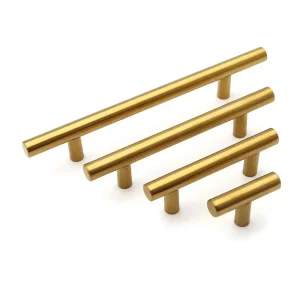
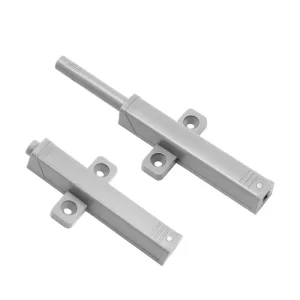
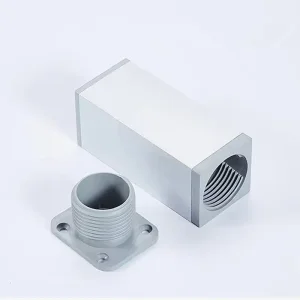
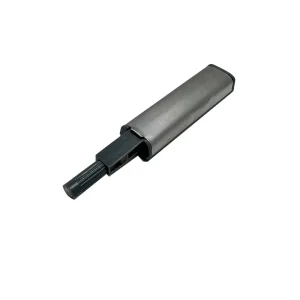
Explore our industrial-grade kitchen handles, cabinet door straighteners, and heavy-duty mechanical magnetic rebounds engineered for modern high-end millwork.
The global market for kitchen cabinet hardware has evolved from standard, functional components to core architectural elements that define space aesthetics and long-term durability. Kitchen doors and drawers are subject to intensive mechanical stress, high humidity levels, and frequent chemical contact. Sourcing agents, furniture manufacturers, and project specifiers require systems that not only align with sleek European aesthetics but also guarantee longevity under standard operating conditions.
Today's architectural designs prioritize seamless surfaces and minimal visual clutter. Consequently, the demand has split into two major tracks: high-end luxury minimalist pulls (using PVD-coated stainless steel and anodized aluminum profiles) and handle-free cabinet mechanisms (utilizing heavy-duty magnetic rebounders and mechanical soft-close push systems). Hardware must withstand structural stresses, preventing door panel warping over multi-year cycles. This has catalyzed the integration of auxiliary control hardware such as tension rod panel straighteners, ensuring that modern floor-to-ceiling cabinet panels remain perfectly planar.
Guangdong Xianghui is a enterprise with strong potential for long-term development, boasting a wide service range and possessing sustainable competitive advantages in technology, brand, and industry. As a leading supplier of furniture hardware, backboards, hair straighteners and hangers, we pride ourselves on providing high-quality products that meet the diverse needs of our customers.
Our range of furniture hardware includes a wide range of accessories and fixtures designed to enhance the functionality and beauty of your furniture. From drawer slides and hinges to knobs and handles, we offer solutions that meet the highest standards of durability and performance. Our commitment to quality ensures that our customers can rely on our products for lasting satisfaction.
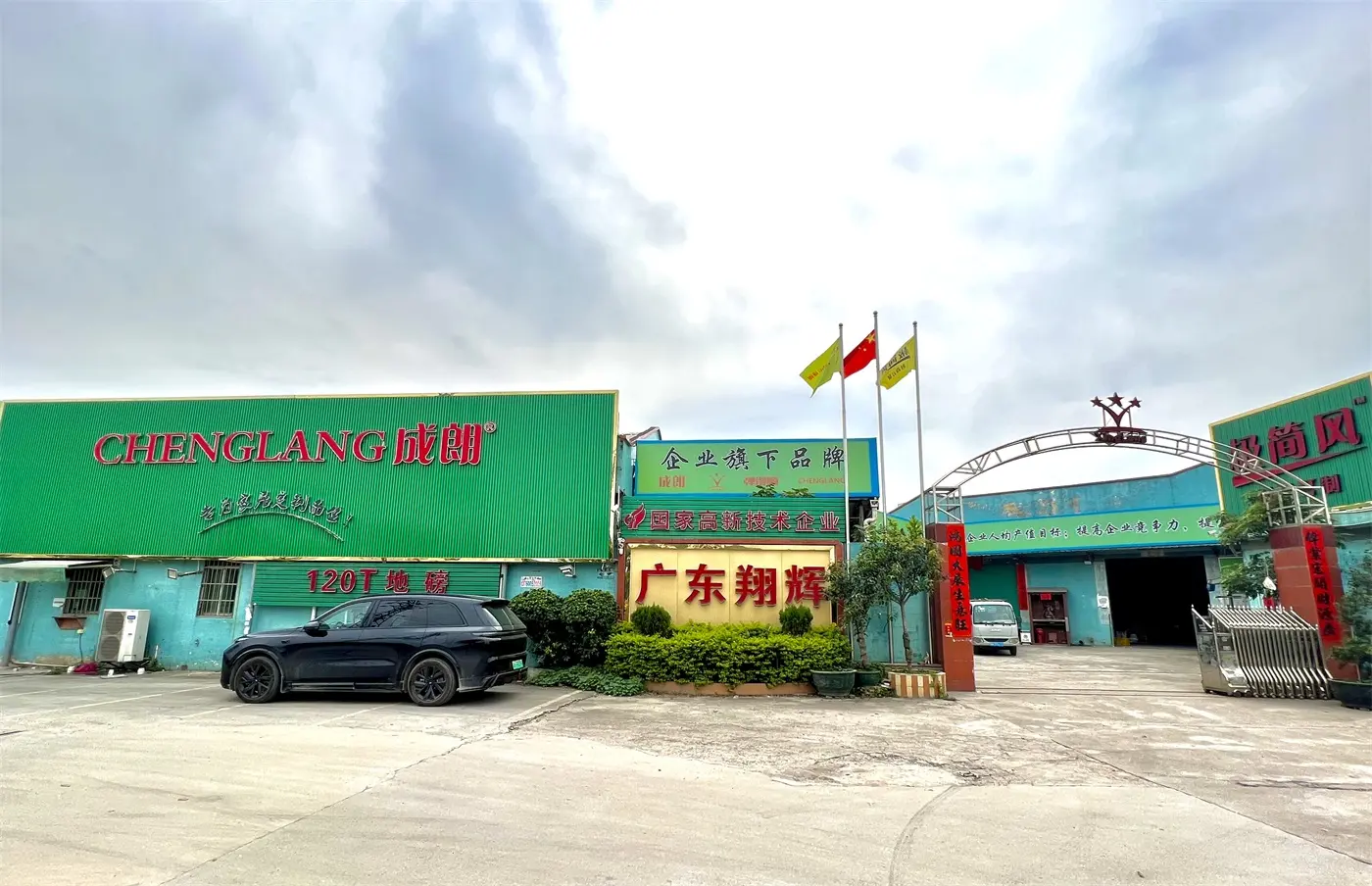
Technological execution, systemic quality controls, and established global distribution networks.
Guangdong Xianghui utilizes advanced automated production equipment and innovative process technology to produce higher quality products that better meet customer needs.
Our brand strength is derived from multiple certifications and international validation. We focus on customer-centric design parameters, serving regional distribution operations with flexibility.
Within the furniture hardware accessories industry, Guangdong Xianghui has established a certain level of credibility and has maintained long-term partnerships with major brands such as DTC, Hettich, Norma, and Quanyou.
Focusing on the application of new technologies to create unique products, we improve efficiency and control costs via flexible small-scale organization adjustments.
Guangdong province, specifically the Pearl River Delta industrial cluster, is the global epicenter for furniture hardware engineering. Our manufacturing base leverages local access to upstream metal smelters, precision tooling machine manufacturers, and surface-finishing specialists. This structural integration allows us to optimize raw material procurement (zinc alloy, 6000-series aluminum extrusions, and SUS304 steel) while shielding clients from sudden price volatility.
Our factory utilizes fully automated multi-cavity hot-chamber die casting machines for zinc components and multi-axis CNC profiling machines for custom aluminum extrusions. These mechanical technologies ensure dimensional tolerances remain within ±0.05mm. The resulting components undergo meticulous automated and hand polishing to prepare the metal for advanced surface finishing.
For high-end markets, we apply Physical Vapor Deposition (PVD) coating and multi-layer electroplating processes. PVD deposits atomic-level metal films in a high-vacuum chamber, creating surface finishes that are exceptionally resistant to scratching and chemical degradation. This process is environmentally clean, compliant with international environmental directives, and yields diverse aesthetic selections, including brushed brass, graphite black, and satin nickel.
Furthermore, our integrated testing laboratories perform continuous destructive testing on production samples. These evaluations include cross-cut adhesion tests for coatings, micro-hardness tests, and chemical exposure tests to simulate prolonged contact with common household detergents, citrus acids, and cooking oils.
Architectural hardware must satisfy distinct regulatory requirements to ensure seamless integration into commercial and residential construction projects worldwide.
For European distribution, hardware must comply with the REACH regulation (EC 1907/2006) governing chemical emissions and toxic trace elements (including lead and nickel release limits). Our structural finishes are verified free of hexavalent chromium (Cr6+) to meet strict environmental and workplace exposure guidelines. Mechanical elements, such as hinges and push latches, conform to EN 1906 functional classification categories, ensuring durability, fire resistance, and safety in residential and commercial settings.
Products bound for North America undergo rigorous evaluation under ANSI/BHMA standards (e.g., A156.9 for cabinet hardware). These assessments verify load-bearing capacity, resistance to impact, and cycle-life stability. Additionally, we verify that our brass and zinc alloys meet the low-lead mandates of California Proposition 65, providing our partners with the certifications required for frictionless clearance and retail distribution.
| Test Standard | Objective | Chenglang Metrics |
|---|---|---|
| ASTM B117 | Salt Spray Test | Up to 96 Hours Pass |
| ISO 2409 | Cross-Cut Adhesion | Classification 0 - 1 |
| EN 15570 | Functional Fittings | Exceeds Level 3 |
| RoHS Directive | Hazardous Substances | Fully Compliant |
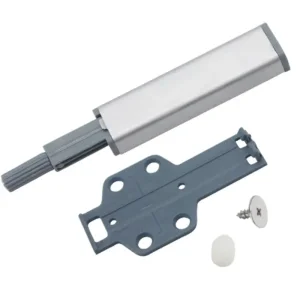
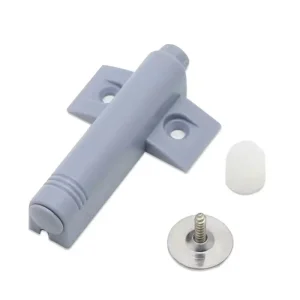
Modern kitchen design heavily features flat, handle-free cabinet doors that rely on push-to-open technology. This design direction presents unique engineering challenges. Standard door hinges lack the rebound force required to push large, heavy wood panels open. To resolve this, we have developed our premium cabinet door magnetic rebounder series, featuring an internal spring system and metal housing.
These devices utilize a high-performance spring mechanism paired with NdFeB (Neodymium) magnets to ensure reliable engagement. Our aircraft-style push bouncers are housed in anodized aluminum or zinc alloys to withstand high impact forces without casing failure. The internal springs are calibrated to a force profile that enables easy opening with a light press, while maintaining sufficient closing force to prevent accidental popping due to ambient air pressure changes.
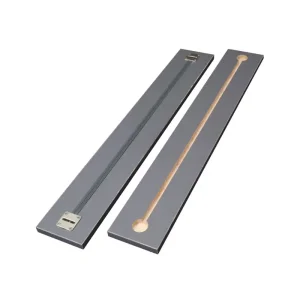
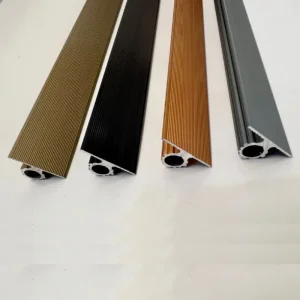
Another common issue with tall kitchen cabinet doors (particularly floor-to-ceiling designs exceeding 1.8 meters) is warping. Wood composite panels (MDF, particle board, plywood) warp when exposed to fluctuating temperature and humidity levels in active kitchens. To protect high-end custom millwork from this damage, we manufacture versatile carbon steel and aluminum-integrated door panel straighteners.
These straighteners are recessed into the rear face of the door panel. By turning an adjustment bolt, installers apply corrective tension that counteracts warping forces. The tension rod system acts as a structural spine, ensuring the cabinet panel remains stable and aligned with adjacent doors. This hardware is essential for ensuring long-term aesthetic and functional performance in high-end projects.
Expert answers addressing the core mechanical, logistical, and structural questions of professional purchasing directors.
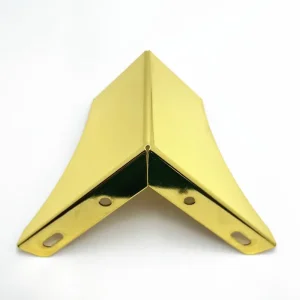
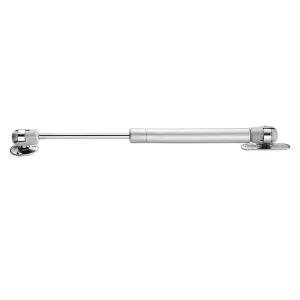
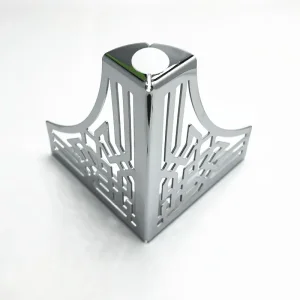
Browse our selection of specialized supporting legs, gas struts, and heavy-duty straighteners designed to optimize cabinet systems.
 Xianghui