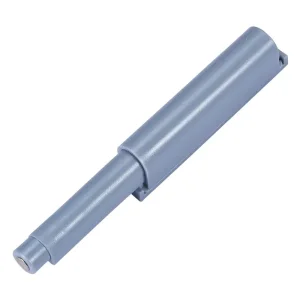
Engineered to meet New York's strict building aesthetics and durability codes, these primary selections provide handle-free opening efficiency for high-traffic environments.
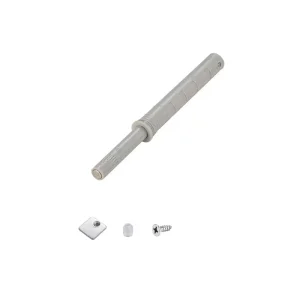
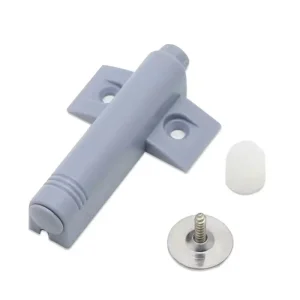
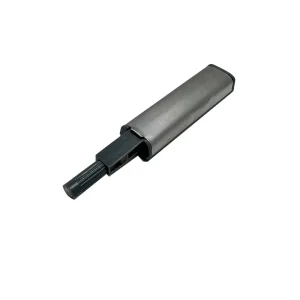
The metropolitan New York area—spanning Manhattan's ultra-luxury residential towers, Brooklyn's historic brownstone renovations, and Queens' massive mixed-use commercial developments—presents a highly demanding environment for architectural millwork hardware. The local design philosophy trends heavily toward minimal, hardware-free visual integrations, demanding high-performance rebound devices (commonly referred to as touch latches, push-to-open pistons, or magnetic rebounders).
Unlike standard suburban residential applications, cabinet hardware in New York's high-rise environments must withstand extreme atmospheric and operational variations. Vertical temperature gradients in high-rise buildings, coupled with aggressive cycle frequencies in high-occupancy commercial and residential complexes, can cause cheap hardware to fail rapidly. Under the pressure of New York design specs, a failed rebound device means compromised interior luxury, misaligned flush panels, and costly maintenance calls.

Understanding the complexities of material sourcing and precision manufacturing ensures long-term system reliability for hardware distributors and commercial developers.
For global procurement officers, sourcing rebound devices requires balanced evaluation across mechanical fatigue resistance, plastic composition stability, magnetic retention, and cost. In low-cost alternatives, standard steel springs degrade rapidly, resulting in lost kinetic energy and a failure to eject heavy cabinet doors. By contrast, premium rebounders utilize high-tension alloy springs coupled with POM (Polyoxymethylene) internal gears, which guarantee uniform performance across vast temperature brackets.
Furthermore, local New York projects demand strict fire safety compliance and material sustainability. Architectural specifications call for non-toxic materials with low VOC output and self-extinguishing properties for high-density commercial zones. Selecting a manufacturer that matches these criteria directly impacts building sign-offs and LEED accreditation compliance.
| Parameter/Spec | Industrial Grade (Xianghui Premium) | Standard Market Grade | New York Project Impact |
|---|---|---|---|
| Base Material | Reinforced POM + ABS / Aluminum Shell | Recycled Plastic Outer Casing | Prevents deformation under variable indoor humidity. |
| Spring Mechanism | High-tension Manganese Steel Spring | Standard Carbon Steel Coil | Ensures robust 100,000+ cycle push ejection without sagging. |
| Magnetic Retention | Rare-Earth Neodymium Magnets (NdFeB) | Sintered Ferrite Magnets | Consistent door closure even under slight alignment offsets. |
| Damping Performance | Integrated hydraulic buffers (specific models) | Friction-only push mechanisms | Eliminates door bounce-back sound, providing premium acoustics. |
Bridging the gap between automated heavy industry in Guangdong and high-end millwork installations across North America.
From space-saving micro-apartments to large commercial fit-outs, discover how our rebounders perform in actual projects across New York's boroughs.
In dense urban residential complexes where every square inch matters, physical hardware sticking out from low cabinets constitutes a safety hazard and cramps room layouts. Our concealed, push-to-open rebounders enable clean, flush cabinet runs in narrow galley kitchens and entryways. The seamless surface reduces visual noise, maximizing the perceived scale of small, high-value Manhattan apartments.
Shared workspaces require durable millwork to handle hundreds of daily open-close cycles. Standard kitchen hardware fails quickly under this wear. We supply double-spring, heavy-duty metal rebounders to Brooklyn commercial office spaces, offering durable performance for lockers, shared credenzas, and breakroom cabinetry.
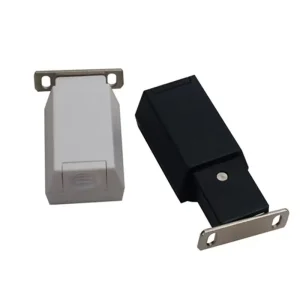
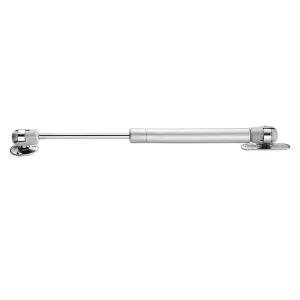
Explore our expanded inventory of heavy-duty cabinet hinges, pneumatic struts, structural adjusters, and precision touch-release bouncers.
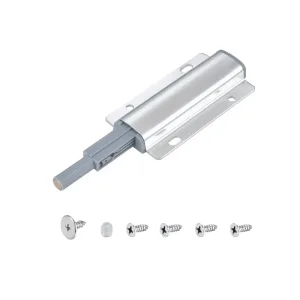
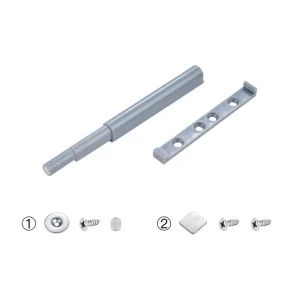
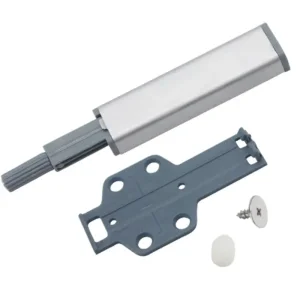
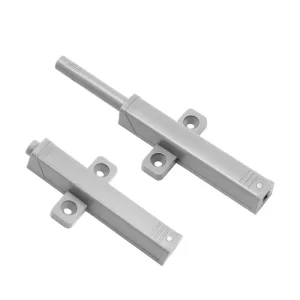
Technical answers to help New York architects, millworkers, and importers source and install push-to-open rebound hardware correctly.
Receive bulk pricing, OEM specifications, and product samples matching your exact architectural and commercial hardware requirements.
 Xianghui