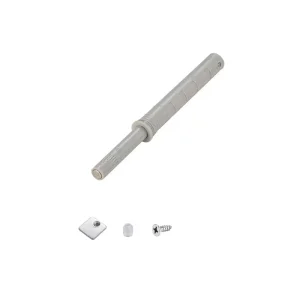
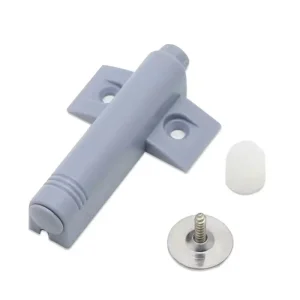
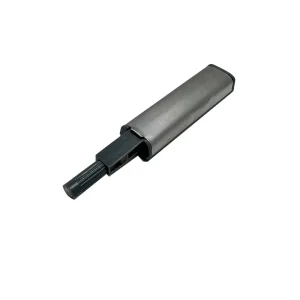
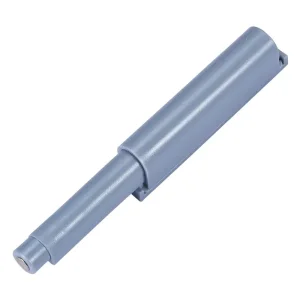
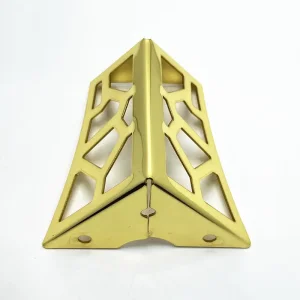
Engineered to SANS requirements for modern interior designs and structural integrity
The South African architectural, interior design, and manufacturing landscape is undergoing a significant transition. Driven by urban renewal initiatives in metropolitan hubs like Johannesburg, Cape Town, and Durban, there is an escalating demand for high-end residential and commercial cabinetry hardware. The modern design language focuses heavily on minimalism—meaning handle-free, push-to-open profiles are no longer just optional luxury elements; they have become a fundamental requirement for contemporary layouts.
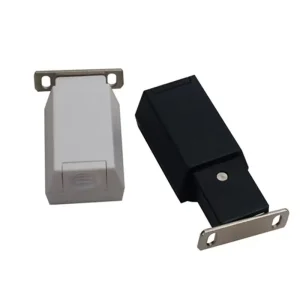
Rebound devices, commonly referred to in the local SA trade as push-to-open latches, touch releases, or spring-loaded ejectors, are widely utilized by local joiners, commercial shopfitters, and furniture manufacturers. South African residential developments (such as those in Steyn City or Val de Vie) prioritize high-spec aesthetic designs that require invisible mechanisms. In corporate developments, particularly in the Sandton and Century City office districts, ergonomics and sleek spatial layout design require silent, heavy-duty mechanical rebound configurations capable of continuous cycles.
"The integration of mechanical push-to-open technology in modern African design optimizes user experiences by removing physical handles, providing continuous aesthetic flow across expansive wardrobe and kitchen panels."
Furthermore, South Africa's diverse microclimates present unique challenges for component manufacturers. Coastal areas in KwaZulu-Natal and the Western Cape experience marine salt air, leading to accelerated oxidation of low-grade metallic finishes. Conversely, inland areas like Gauteng experience dry, dust-heavy conditions that can foul internal mechanical gears and spring pathways. Understanding these ambient factors is essential when selecting raw material grades for push-to-open systems deployed in the region.
The global interior design sector is moving rapidly towards handle-free aesthetics. In the South African high-end market, this trend is driven by three main factors: space optimization, hygienic touchpoints, and technological integration. Rebounders and soft-close mechanisms represent the modern standard for this application.
In typical urban dwellings in Cape Town where micro-apartments are on the rise, space efficiency is crucial. Protruding cabinet handles reduce clear walkways and disrupt the visual flow of small rooms. Using high-strength touch releases enables the installation of flat, flush doors, creating a spacious feel. In hygienic terms, handleless systems are easier to clean and disinfect, which aligns with recent updates in residential care facilities and commercial culinary environments.
Additionally, local manufacturers are shifting from simple magnetic catches to heavy-duty mechanical assemblies that integrate cushioning and buffer adjustments. The trend toward large-format, ceiling-high cabinet doors (often exceeding 2.7 meters in modern SA residences) requires heavy-duty rebound devices. These systems need to generate sufficient spring ejector force (measured in Newtons) to overcome the weight and air resistance of large door panels without causing damage to the hinge mechanisms.
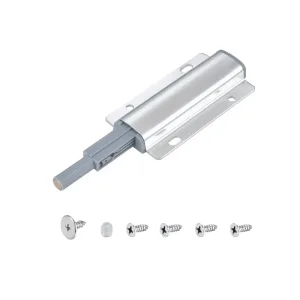
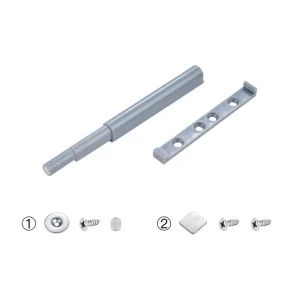
The performance of a push-to-open device depends on its material selection and structural engineering. At Chenglang, we apply strict quality control to the mechanics of spring-assisted release catches, focusing on three core components: the spring profile, the magnetic attraction core, and the outer protective casing.
Spring Dynamics & Ejection Travel: Our rebound devices use high-carbon steel springs (or SUS 304 spring wire for coastal installations). We calibrate the spring rate to deliver between 40N and 120N of initial kinetic push. This ensures that even heavy, double-faced melamine or solid timber doors are pushed past the hinge's catching point. The ejector pin features adjustment margins (+4mm to -1mm) to align door panels precisely.
Magnetic Retaining Strength: The magnetic tip requires high-grade neodymium magnets (NdFeB) rather than traditional ferrite components. Neodymium ensures consistent holding force over time, keeping the door flat against the cabinet frame to prevent warping, while releasing reliably with a gentle touch.
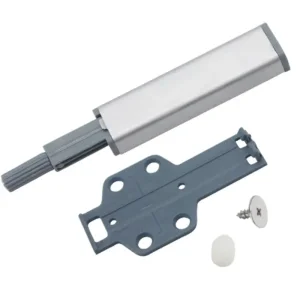
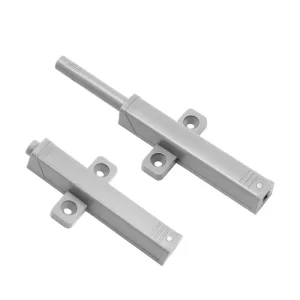
Casing Engineering: Modern installations use two main types of casing:
| Casing Material | Ideal Environment | Key Technical Benefits | SA Market Fit |
|---|---|---|---|
| Anodized Aluminum Alloy (6063-T5) | Commercial, Coastal (Durban/Cape Town) | High corrosion resistance, structural strength, premium metallic look. | Highly recommended for premium architectural builds and humid areas. | ABS & POM High-Impact Polymers | Residential Interior Cabinetry | Self-lubricating piston action, excellent fatigue life, silent operation. | Best value for standard high-volume production and mass furniture manufacturing. |
For industrial procurement managers, retail hardware distributors, and high-volume shopfitters in South Africa, supply chain stability is critical. Importing hardware requires partners who understand the logistics of port clearance at Durban and Cape Town, as well as the compliance criteria set by the South African Bureau of Standards (SANS).
At Chenglang (Guangdong Xianghui), we focus on international compliance standards. Our production lines conform to ISO 9001:2015, and our products undergo independent SGS testing to verify cycle endurance (50,000+ open-and-close cycles under load) and corrosion resistance (Neutral Salt Spray test up to 48 hours for standard units, and up to 96 hours for specialized maritime components).
Pro-Tip for Importers: Shipping lead times from China to South Africa range from 20 to 30 days. To mitigate local freight delays, we provide consolidated shipping options, customs-compliant documentation, and protective packaging to prevent moisture damage during transit across the equator.
Guangdong Xianghui is a furniture hardware manufacturer focused on long-term development, offering a comprehensive product range and competitive advantages in technology, design, and manufacturing. As a supplier of furniture hardware, backboards, and interior fittings, we specialize in high-quality products that meet the diverse requirements of our global customer base.
Our furniture hardware catalog includes a wide range of accessories and fixtures designed to improve both the functionality and aesthetic appeal of modern cabinetry. From drawer runners and hinges to modern touch latches and adjustable support legs, we manufacture products that meet high standards of durability and performance. Our focus on quality ensures that customers can depend on our components for long-term reliability.
With modern manufacturing facilities in Guangdong, China, we operate advanced machinery and employ experienced engineers. This setup allows us to offer both standard wholesale production and customized OEM/ODM solutions to meet the specific requirements of the South African market.
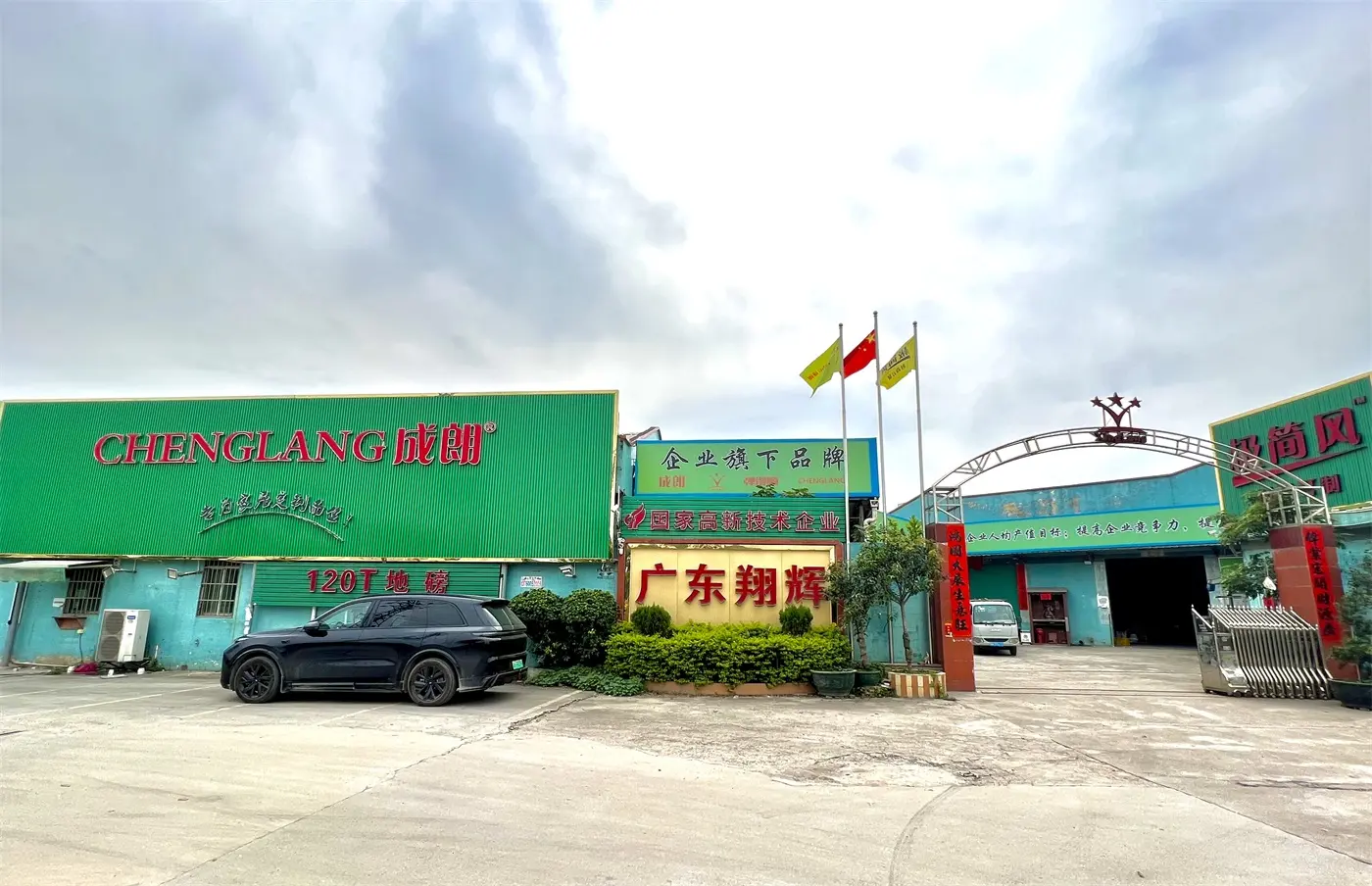
Delivering technological innovation and supply chain security to South African buyers
The next generation of rebound hardware will move beyond purely mechanical systems. Research and development teams are focusing on several key updates:
Haptic Force Feedback Adjustments: Future systems will allow users to adjust rebound pressure manually by turning a integrated dial. This feature helps prevent damage when cabinet contents change in weight over time.
Corrosion-Proof Materials: To address the needs of coastal installations, next-generation lines will use high-grade polymer composites that resist oxidation and structural wear.
IoT and Smart Integration: We are exploring designs for smart homes that combine micro-mechanical rebounders with low-voltage electromagnetic locks. These systems can be released via voice control or motion sensors while maintaining manual override options in case of power loss.
Complete selection of rebound systems, adjustable supports, and architectural hardware accessories
Expert answers on rebound devices, load limits, and international shipping to South Africa
 Xianghui